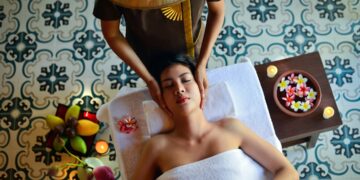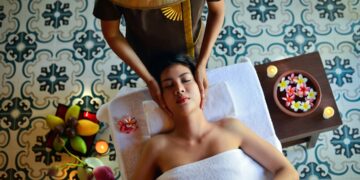

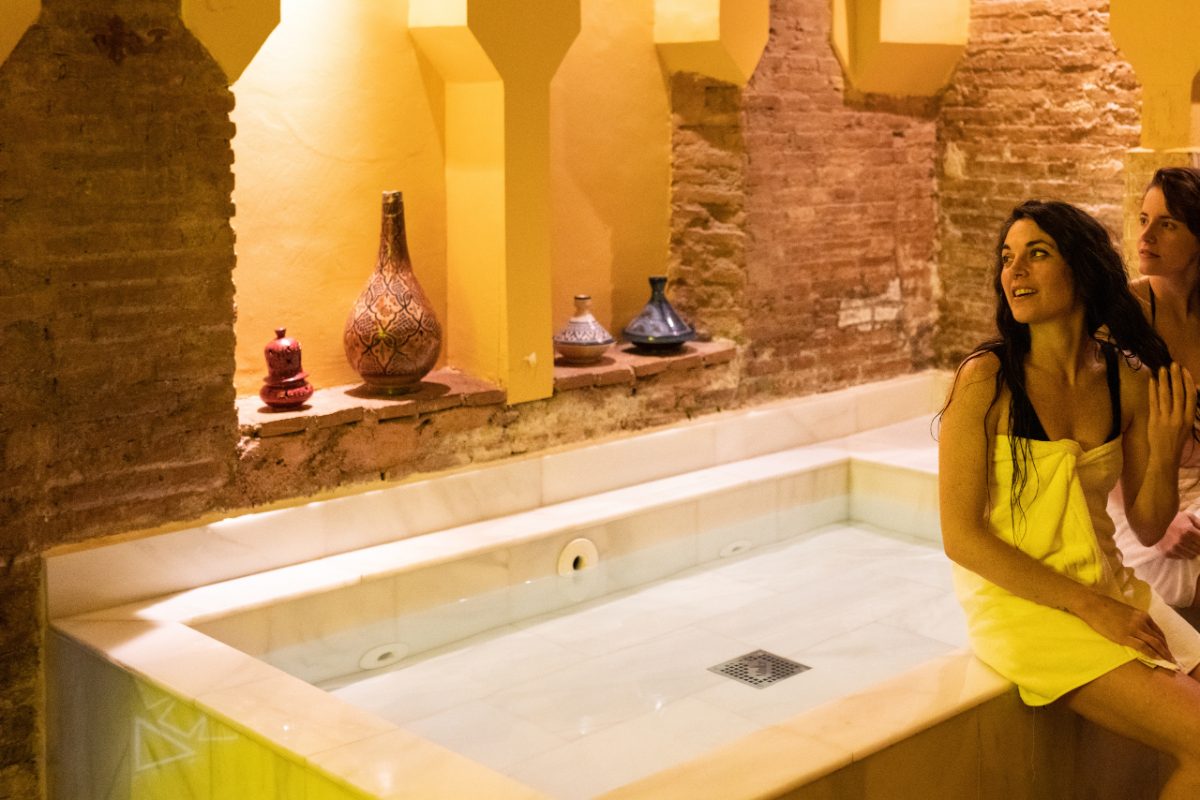
Hammam ritual is woven into the fabric of Moroccan life, and once you step through those tiled doors, you understand exactly why millions of people return every single week.
Where the tradition comes from
The hammam ritual has deep and layered roots. It draws from Roman communal bathing culture and from the Islamic principle of physical and spiritual purification before prayer. Many hammams in Morocco sit close to mosques for exactly this reason. Over centuries, Moroccan communities shaped these influences into something entirely their own: a weekly gathering that is equal parts cleansing, socialising, and renewal.
This is not simply a bathhouse. It is a living space where neighbours talk, mothers bring daughters, and brides prepare for their weddings. The stresses of the week are literally scrubbed away inside these warm tiled rooms. For most Moroccans, the weekly visit feels as essential as Friday couscous.
Today, the hammam ritual sits at the centre of a broader conversation about cultural heritage. Morocco has registered 16 elements on UNESCO’s Representative List of the Intangible Cultural Heritage of Humanity, and researchers continue to document the hammam’s role as a social and architectural cornerstone of Moroccan cities. It belongs in that same conversation.
The steps that make up the experience
The hammam ritual follows a clear sequence, and understanding that sequence helps you get the most from every visit. You begin in a warm room where steam opens your pores and starts to loosen muscle tension. From there, you move into a hotter room where temperatures can reach between 30 and 50 degrees Celsius, with humidity above 90 percent.
Next comes the black soap, known as savon beldi or khoul. This paste is made from crushed olives and olive oil. It is rich in vitamin E and antioxidants. An attendant or a friend applies it across your body and leaves it to penetrate the skin for several minutes. The soap softens dead cells and prepares the skin for exfoliation.
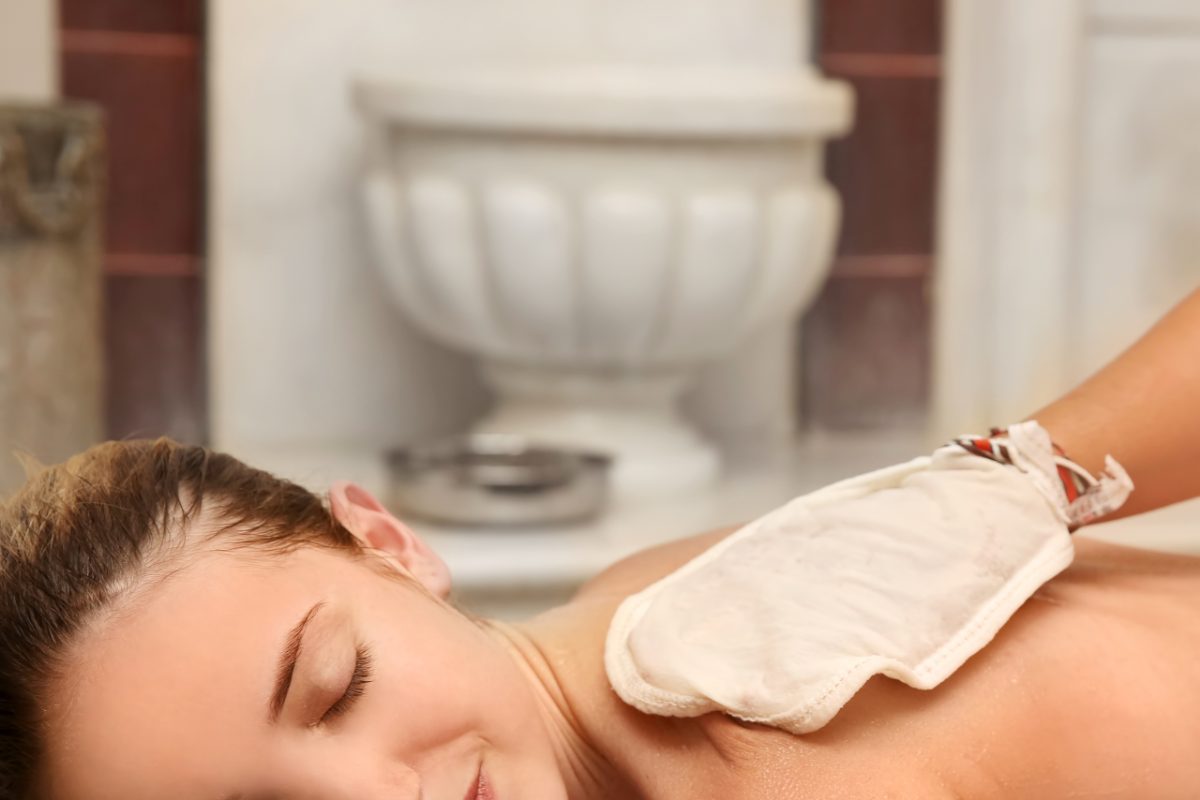
Then comes the kessa, a coarse exfoliating glove. The attendant uses it in long, firm strokes across the body. The exfoliation improves blood circulation and removes dead skin cells, revealing a freshness underneath that feels almost surprising the first time. After rinsing, many hammams apply a mask of ghassoul clay, sourced from the Atlas Mountains, to draw out remaining impurities. A final coat of argan oil closes the session with deep moisture.
What the body and mind actually gain
The physical benefits of the hammam ritual are real and well-documented. Steam therapy relaxes muscles, reduces tension, and encourages the body to release toxins through perspiration. The exfoliation step increases oxygen flow to skin tissue and supports lymphatic drainage. The ghassoul clay tightens pores and balances the skin. Argan oil, used by Amazigh communities for centuries, nourishes and repairs the skin barrier with omega fatty acids and vitamins A and E.
Beyond the physical, however, something quieter happens inside a hammam. The pace slows. Conversations become gentle. The outside world does not follow you past the entrance. Many people describe the feeling after a session not just as clean, but as reset. Both meanings matter: the body is refreshed, and the mind is genuinely calm.
For people navigating busy modern lives in Casablanca, Marrakech, or Rabat, that reset carries real value. Wellness professionals across Morocco increasingly point to the hammam ritual as a local answer to the global conversation about stress, burnout, and mental wellbeing.
What wellness professionals say
The hammam ritual is often underestimated as a wellness tool, precisely because it is so familiar. Moroccans have practised this for generations, and that familiarity can make people forget how powerful the sequence actually is. The combination of heat, exfoliation, mineral clay, and grounding oils works on the nervous system in ways that modern spa treatments often try to replicate. When you experience it in a traditional neighbourhood setting, surrounded by the sounds of community, the mental benefit is amplified significantly. This is not a luxury reserved for tourists. It is a public health practice with centuries of evidence behind it, and it deserves recognition as one of Morocco’s most valuable wellness contributions to the world.
Industry perspective, wellness and cultural heritage professionals in Morocco
Public hammams and modern spa versions
Morocco offers 2 very different hammam experiences, and both are worth knowing. The public neighbourhood hammam, often called the beldi hammam, is affordable and genuinely communal. Entry at many public facilities costs as little as 10 to 20 dirhams. You bring your own towel, soap, and kessa glove. The experience is social and direct.






Luxury spa hammams, found in riads and high-end hotels in Marrakech and Casablanca, offer a more private version. Attendants guide every step, and the session often includes add-on massages with argan or rose oil. These venues blend Moroccan tradition with contemporary spa design, and they serve both residents and visitors well.
Neither version is more correct than the other. Each serves a different need. If you want cultural immersion and community warmth, the neighbourhood hammam delivers it. If you want quiet, guided care, the spa hammam is the right choice. Many Moroccans use both depending on the week and the mood.
The hammam ritual belongs in your routine
The hammam ritual is not a relic. It is a living practice that continues to offer something rare in modern life: a structured pause that serves the body and the mind at the same time. Every element of it, from the steam to the exfoliation to the final oil, has a purpose. Together, they create a reset that no single product or treatment can fully replicate.
If you have not visited a hammam recently, this is your reminder to go. Book a session at your local neighbourhood hammam or try a spa version in your city. Bring a friend, take your time, and let the hammam ritual do exactly what it has always done: bring you back to yourself.
Discover more about hammam ritual
- Morocco Intangible Cultural Heritage, UNESCO
- Eco-Hammam: Ecological Transition of a Key Social Heritage Sector in Morocco, MDPI Research
- Complete Moroccan Hammam Guide: Traditional Bathhouses, Etiquette and Best Hammams, City Tours Morocco