

Renewable energy in Morocco is no longer a promise on paper. The numbers are live, the contracts are signed, and investors from 4 continents are committing capital for the long term.
Why the fundamentals are strong
Morocco sits at a rare intersection. Due to its high renewable energy potential in both solar and wind, and its geographical location between Europe and the rest of Africa, Morocco aspires to be a global leader in the production and export of green hydrogen and ammonia. That position gives foreign investors 2 markets in 1 footprint.
Morocco has historically relied heavily on imported fossil fuels, which account for over 90% of its energy supply. This dependence has made the country vulnerable to volatile global energy prices and geopolitical uncertainty. Transitioning to domestically produced renewable energy offers a viable solution, enhancing energy security, reducing greenhouse gas emissions, and minimizing reliance on foreign resources.
In the Renewable Energy Country Attractiveness Index 2025, compiled by EY, Morocco ranks first in Africa, ahead of Egypt and South Africa, and 27th globally. It also sits in the top 10 of the Climate Change Performance Index 2025, with a rating of “high,” surpassing most European Union member countries. Those rankings matter to fund managers running due diligence.
The targets and the trajectory
The government has set a clear and rising sequence of goals. In 2009, the National Energy Strategy of Morocco set an initial goal to achieve 42% of total installed power capacity from renewable energy sources. By 2015, during COP21, Morocco raised its ambition, announcing plans to increase renewable energy’s share to 52% by 2030.
Progress is faster than expected. Investments in renewable energy projects have risen by nearly 42% over the past 4 years. The share of solar and other renewable energy sources grew from 37% in 2021 to more than 44% in 2024. Morocco is also on track to exceed its initial 2030 forecasts, revising its renewable energy target upward to 56% by 2027.
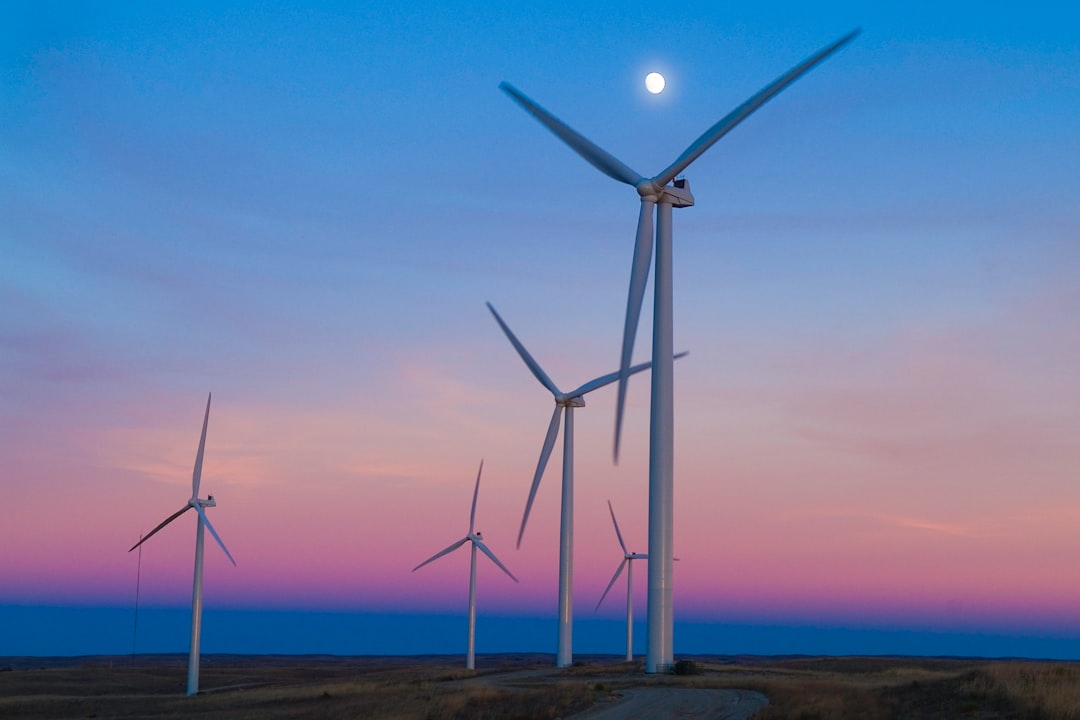
Morocco’s National Authority for Electricity Regulation (ANRE) has approved annual capacity targets for wind and solar over the 2025 to 2029 period, targeting an increase of nearly 6.9 GW from 2,450 MW in 2025 to 9,338 MW in 2029. This is 29% higher than the previous target. Investors reading the regulatory calendar see a consistent upward revision, not a stalled agenda.
What supports foreign capital specifically
Renewable energy projects are supported through the Moroccan Agency for Sustainable Energy’s (MASEN) institutional framework, which offers a “one stop shop” for private project developers, bringing together permitting, land acquisition, and financing aspects, as well as securing a state guarantee for the investment.
Morocco’s inbound foreign direct investment (FDI) increased by 50.7% in the first 9 months of 2024, reaching over $1.6 billion. Renewable energy is a primary driver of that number. The Moroccan government’s supportive policies and investment incentives are pivotal in attracting FDI in the renewable energy sector. Tax incentives, subsidies, and public-private partnerships create an attractive environment for investors.
Morocco is the only country on the African continent with a free trade agreement with the United States. That agreement supports Morocco’s goals to develop as a regional financial and trade hub, providing opportunities for the re-export of goods to markets in Africa, Europe, and the Middle East. That legal architecture lowers risk for international capital.
Expert perspective on long-term commitment
Morocco’s renewable energy pipeline is not speculative. The regulatory framework is tested, the agency infrastructure is in place, and the projects entering execution today have multi-decade revenue visibility. Foreign investors are not simply buying access to solar irradiance or wind corridors. They are buying into a state that has sequenced its energy policy with discipline across more than a decade. The MASEN single-window model reduces permitting friction substantially. The Offre Maroc initiative adds a structured framework for hydrogen projects, covering land, incentives, and offtake pathways in one package. For institutional investors with a 20-year horizon, Morocco competes directly with southern European markets on both risk profile and return potential.
Industry perspective, sustainability and investment professionals in Morocco
The hydrogen dimension
The Offre Maroc program was launched in 2024 under the directive of King Mohammed VI with a total budget exceeding 319 billion dirhams, approximately 30 billion euros, complementing the previous hydrogen strategy.
In March 2025, a first batch of 5 projects was selected, featuring consortia that include companies from Morocco, China, the UAE, Saudi Arabia, the USA, Spain, and Germany. That list of countries signals broad confidence across geographies. The EU-Morocco Green Partnership, signed in October 2022, created a policy dialogue on climate, energy, and the green economy. The partnership explicitly includes hydrogen economy development. It marked the EU’s first such agreement with a non-EU country.





With its significant solar and wind energy potential, Morocco is one of the countries with the largest potential for green hydrogen generation, capable of meeting more than 4% of global demand by 2030. For European buyers seeking to reduce fossil fuel dependence, Morocco is 14 kilometers from Spain and already connected to the European grid.
Why renewable energy Morocco works as a long-term bet
The convergence of data here is specific. Morocco has stable policy direction, a rising capacity target it is actually meeting, a single-agency entry point for foreign investors, and a geography that links 2 of the world’s largest consumer blocs. Energy Transition and Sustainable Development Minister Leila Benali announced plans to more than triple annual renewable energy investments to $1.4 billion by 2027, underscoring the scale of the kingdom’s long-term commitment.
Morocco’s potential is attracting foreign investors, as the country is seen as the only energy and commercial corridor connecting Europe, Africa, and the Atlantic basin. That corridor status is not marketing language. It is a structural advantage backed by trade agreements, existing infrastructure, and a government that has revised its renewable energy targets upward 3 times in 15 years.
For any operator or fund evaluating where to place capital in Africa’s energy transition, renewable energy in Morocco offers a combination that is rare: credible targets, transparent rules, and a growing roster of global co-investors already at the table.
Discover more about renewable energy
- Morocco Energy, U.S. Commercial Service Country Guide
- Renewable energies in Morocco: comprehensive review, ScienceDirect
- Morocco accelerates green hydrogen push with $35bn investment drive, Middle East Online