
Argan oil is the quiet anchor of summer haircare in Morocco, and the rest of the world is finally catching up to what Amazigh women have known for generations.
Why summer hair needs more than a quick rinse
Summer in Morocco is serious. The sun sits high over the medina rooftops, the air carries salt from the Atlantic, and the heat between Marrakech and Agadir can strip moisture from hair within hours. Argan oil is the main source of revenue in southern Morocco, where few other crops survive the low rainfall and searing summer heat. That connection between the land and the plant is not accidental. The argan tree evolved in precisely the conditions that make Moroccan summers so demanding on skin and hair.

Most people reach for a conditioner and move on. The real solution is a 2-ingredient system that treats the scalp first, then seals the hair shaft. That system starts with rhassoul clay and finishes with argan oil. Both ingredients come from Moroccan soil, and both address the specific damage that heat, humidity, and sun exposure create every summer.
What rhassoul clay does for your scalp
Originating in the Atlas Mountains, Moroccan rhassoul clay is a time-tested remedy for hair and skin care. The name “Rhassoul” comes from the Arabic word “Rassala,” which means “to wash.” The people of Morocco have used rhassoul clay since the eighth century to cleanse their skin and keep it radiant.
Unlike traditional shampoos, rhassoul clay does not strip the hair of its natural oils, making it a gentle alternative for hair care. It acts as a natural detoxifier, drawing out impurities and excess oils without disrupting the scalp’s natural balance. This can help reduce dandruff and scalp irritation. In summer, when sunscreen, sweat, and styling products build up fast, that deep cleanse becomes essential.
The clay’s mineral content strengthens hair follicles, promoting healthier and potentially thicker hair growth. It also enhances hair’s volume and shine, leaving it looking vibrant and full of life. Minerals like silica, magnesium, and potassium make rhassoul clay ideal for both hair and skin care applications.
How argan oil seals and protects after cleansing
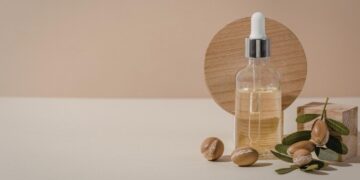
After the clay cleanses, argan oil does the repair work. Argan oil contains a high concentration of essential fatty acids, antioxidants, and vitamin E, which are vital for healthy skin and hair. Its ability to penetrate hair fibers makes it a great treatment for damaged hair, improving shine and softness while reducing breakage. A study published in the Journal of Cosmetic Science found that argan oil reduced damage caused by hair dye and heat styling.
One of the standout properties of argan oil is its high concentration of vitamin E, a potent antioxidant that combats free radicals and helps prevent signs of aging. Linoleic and oleic acids in argan oil maintain the skin’s natural barrier, locking in moisture and promoting repair. For hair, this means the summer sun does less damage each time you step outside.
The argan tree is an endemic woodland species found in the Arganeraie Biosphere Reserve in southwest Morocco. Rural women, and to a lesser extent men, practise traditional methods to extract argan oil from the fruit of the tree. The oil has multiple uses for cooking, medicines, and cosmetics. UNESCO listed the argan area within the Man and the Biosphere Programme, and also inscribed the knowledge and practices associated with argan on the intangible cultural heritage list.
Expert perspective on Moroccan natural beauty
The combination of rhassoul clay and argan oil is not a trend. It is a complete system that addresses the 2 main summer hair problems at once: excess buildup on the scalp and moisture loss along the hair shaft. Rhassoul clay carries a negative ionic charge, which draws out positively charged pollutants and product residue without over-drying. Argan oil then steps in to replace the lipids and seal the cuticle before heat exposure begins. What makes this pairing genuinely effective is the sequence. You must cleanse first and nourish second. Reversing the order prevents both ingredients from performing at their best. This is a principle that cooperatives in southern Morocco have understood for generations, and it is exactly what modern formulation science now confirms.
Industry perspective, natural beauty and haircare professionals in Morocco
How to build your summer routine around both ingredients
The routine is simple. Use rhassoul clay as your weekly cleansing mask and argan oil as your daily finishing treatment. Mix 2 tablespoons of clay with enough water to form a thin paste, and apply it evenly to your scalp and hair. Leave it on for 5 to 10 minutes before rinsing thoroughly. This mask removes excess oil, product buildup, and impurities from the scalp while nourishing hair strands with the moisturizing properties of argan oil.
When preparing rhassoul clay for shampooing hair, you may want to add a small amount of apple cider vinegar or aloe vera gel to the clay paste. This helps neutralize the naturally alkaline clay and bring out your hair’s natural shine. After rinsing, apply 3 to 5 drops of argan oil to damp ends and let it absorb before you step into the sun.
The market is also shaped by the role of women’s cooperatives in Morocco, which contribute to both social empowerment and consistent product supply. The industry supports a substantial workforce, employing over 13,774 individuals across 1,014 cooperatives, with a notable emphasis on empowering women through 688 dedicated women’s cooperatives. Buying from a verified Moroccan cooperative means your purchase supports the communities that have protected this knowledge for centuries.



Why this heritage combination belongs in your summer routine
Argan oil belongs at the center of a summer haircare routine because it addresses 2 problems at once: sun damage and moisture loss. The Morocco argan oil market is growing rapidly due to increasing global demand for natural, organic, and chemical-free products in cosmetics, hair care, and food applications. That global appetite confirms what Moroccan women have always known.
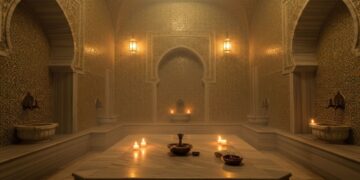
Pair argan oil with rhassoul clay and you have a complete system: clay cleanses the scalp of summer buildup, and argan oil restores the shine and strength that heat removes. Instead of focusing solely on exporting raw argan oil, Morocco aims to develop a full-fledged cosmetics industry, producing high-value skincare and haircare products. That ambition starts with the 2 ingredients already sitting in the hammam.
Try this combination for 4 weeks this summer and share your results with us at MAwebzine. Tell us which Moroccan cooperative you sourced from, and let’s build this conversation together.
Discover more about argan oil
- UNESCO Intangible Cultural Heritage: Argan practices and know-how concerning the argan tree
- Morocco’s Cosmetech Valley: A Game-Changer for the Argan Industry? (Morocco World News, 2025)
- Argan oil and the importance of the argan tree to Morocco (UN Today, 2025)