
CONTACT
  • Login
Upgrade
MAwebzine
Advertisement
  • Home
    • Our Authors
    • MAwebzine Readers Club
    • Media Kit
    • Contact
    • Cookie Policy
    • Terms and Conditions
  • News
  • Lifestyle
    • Beauty
    • Kids
    • Interior Decoration
    • Well-being
  • Vibes
  • Culture
  • Sports
  • Travels
  • Business
  • World
  • Local Guide
    • Activities in Morocco
    • Hotels in Morocco
    • Nightlife in Morocco
    • Restaurants in Morocco
    • Services in Morocco
    • Shopping in Morocco
  • APP
  • Home
    • Our Authors
    • MAwebzine Readers Club
    • Media Kit
    • Contact
    • Cookie Policy
    • Terms and Conditions
  • News
  • Lifestyle
    • Beauty
    • Kids
    • Interior Decoration
    • Well-being
  • Vibes
  • Culture
  • Sports
  • Travels
  • Business
  • World
  • Local Guide
    • Activities in Morocco
    • Hotels in Morocco
    • Nightlife in Morocco
    • Restaurants in Morocco
    • Services in Morocco
    • Shopping in Morocco
  • APP
No Result
View All Result
MAwebzine
No Result
View All Result
Home Lifestyle Culture

Fête du Trône: families, cities, visitors

Discover how Morocco's biggest national celebration comes alive in homes, streets, and medinas across the country.

A Moroccan family dressed in traditional djellabas gathering outdoors during Fête du Trône festivities in a city medina

Fête du Trône pulls back the curtain on a Morocco most visitors never get to see, a country that dresses itself in red flags, opens its doors, and celebrates with a joy that feels completely unplanned.

What Fête du Trône actually is

Fête du Trône, known in Arabic as Eid al-Arsh, is the most important civic holiday in the Kingdom of Morocco. It is celebrated on July 30 each year and commemorates the accession of King Mohammed VI to the Alaouite throne in 1999, following the death of his father, King Hassan II.
Throne Day has been observed since the era of King Mohammed V, but the date has changed twice in modern Moroccan history. Under Hassan II, who reigned from 1961 to 1999, the holiday fell on March 3, the anniversary of his own accession to the throne. When his son King Mohammed VI ascended on July 30, 1999, the official date was moved to mark his accession.

The day is both a celebration of the monarchy and a national review moment. The King’s annual Throne Day speech is the central political address of the Moroccan calendar, in which the monarch sets out priorities for the year ahead. The king traditionally delivers a televised speech, watched closely by the population. Many families gather that evening to watch it together.

How families celebrate across the country

According to Moroccan tradition, the King and his followers wear white on this day. You will also see many people in the streets in traditional Moroccan costumes. Traditional clothing for women and men in Morocco consists of long, flowing robes with light-colored hoods and slippers.

The family dimension is central to this holiday. Moroccan households prepare traditional meals, bring out their finest clothing, and gather across generations. Official ceremonies typically underline the enduring unity between the monarch and the Moroccan people. Communities come together to host celebrations, encouraging unity and national pride and building camaraderie among neighbors.

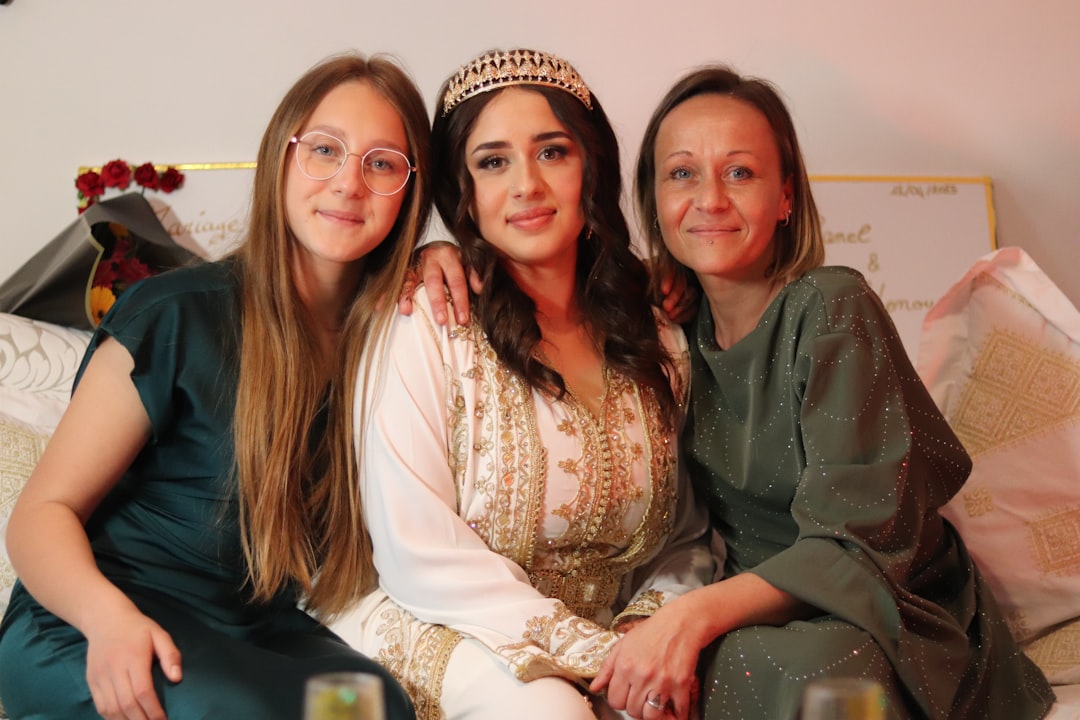
Streets, public buildings, and homes are decorated with Moroccan flags and portraits of the King. Children carry small flags in neighborhood streets. Grandparents sit in front of televisions while the next generation fills the squares outside. The holiday connects 3 generations in a single evening in a way that few other events can.

Install the MAwebzine App
Always stay up to date with the latest news from Morocco.
Install now →

City by city: where the celebration hits hardest

The festivities take place in all Moroccan cities, but some of the largest Throne festivals are usually held in Marrakech or Rabat. Each city offers a different version of the same celebration.

In Rabat, the capital, official ceremonies take center stage. Official ceremonies take place across the country, including military parades, tributes, and speeches in various cities. Major avenues are lit up, giving towns and cities a festive feel. The boulevard Mohammed V fills with families walking in their best traditional dress.

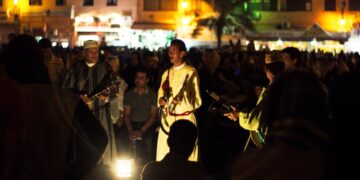
In Marrakech, sound and light shows take place on the walls of the historic medinas. The Jemaa el-Fna square and the ramparts of the medina host spectacular performances. Cities burst into life with vibrant parades, concerts, traditional dances, and art exhibitions, honoring Morocco’s diverse cultural heritage. These festivities offer a glimpse into Moroccan traditions, with performers in customary attire playing folkloric music.

Major cities including Rabat, Casablanca, Marrakech, Fez, Tangier, and Agadir host evening fireworks displays. In Fez, the ancient medina becomes a stage for musicians and storytellers who perform in the open air until late. In Casablanca, the broad boulevards host public concerts that draw enormous crowds.
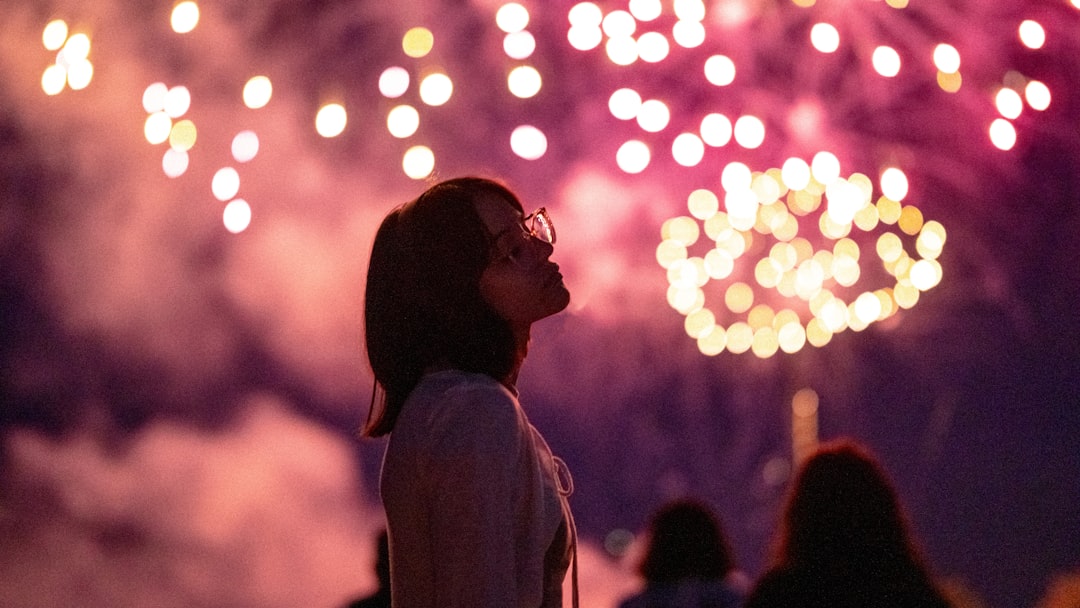
A woman in the crowd watching fireworks light up the sky above a Moroccan city during Fête du Trône

-

A performer in traditional costume on stage at the popular arts festival in Marrakech, surrounded by a crowd at night

Popular arts festival guide Marrakech

03/07/2026
A maalem musician performing at the Morocco festival season in Essaouira, with a crowd gathered around the open-air stage

Morocco festival season: why June leads

19/06/2026
A woman in traditional dress pours Morocco mint tea from a silver teapot onto an ornate brass tray in a riad courtyard

Mint tea: 6 best ceremonial tea rooms

08/06/2026
Crowd gathering at the main stage on Place Moulay Hassan during the Gnaoua Festival Essaouira at night

Gnaoua Festival: Morocco Essaouira Guide

02/06/2026
_Aerial view of Rabat Morocco showcasing modern architecture and the Royal Theatre Rabat site along the riverfront

Royal Theatre Rabat Redefines Morocco’s Culture

04/05/2026
Sheep for sale at a Moroccan livestock market ahead of Eid al-Adha 2026

Eid al-Adha 2026: Sheep Prices in Morocco

29/03/2026

Expert perspective on the holiday’s deeper meaning

Fête du Trône is not a holiday that Moroccan families simply observe from a distance. It is something they feel personally. When the King addresses the nation, people listen together as a household, and the speech becomes a topic of conversation for days afterward. The food prepared on this day is not accidental either. Families cook specific dishes that connect to their regional identity, whether that is a slow-cooked lamb tagine in the mountains or a seafood meal along the coast. For a visitor, arriving on July 30 without understanding this dimension means missing the real Morocco entirely. The public celebrations are remarkable, but the private ones, the family table, the shared television, the children dressed in djellabas, are where the heart of the holiday lives.

Industry perspective, culture and tourism professionals in Morocco

What visitors need to know before they arrive

July 30 is the most important civic public holiday in Morocco. Government offices, banks, and most businesses close for the day. Plan your practical needs in advance. Carry enough local currency, as ATMs can have long lines near public squares.

The 30th of July falls in full summer. Temperatures inland often exceed 35 degrees Celsius. In Marrakech and Fez, they can reach more than 40 degrees. Carry water, plan visits for early morning or evening, and seek shade in the middle of the day.

Hotels fill up several weeks in advance around July 30. The period around this date is one of the high tourist seasons in Morocco, attracting both Moroccans living abroad returning for summer and foreign visitors. Book accommodation early, particularly in Marrakech, Rabat, and Fez. Position yourself near a large public square for the evening fireworks and the festive atmosphere that follows.


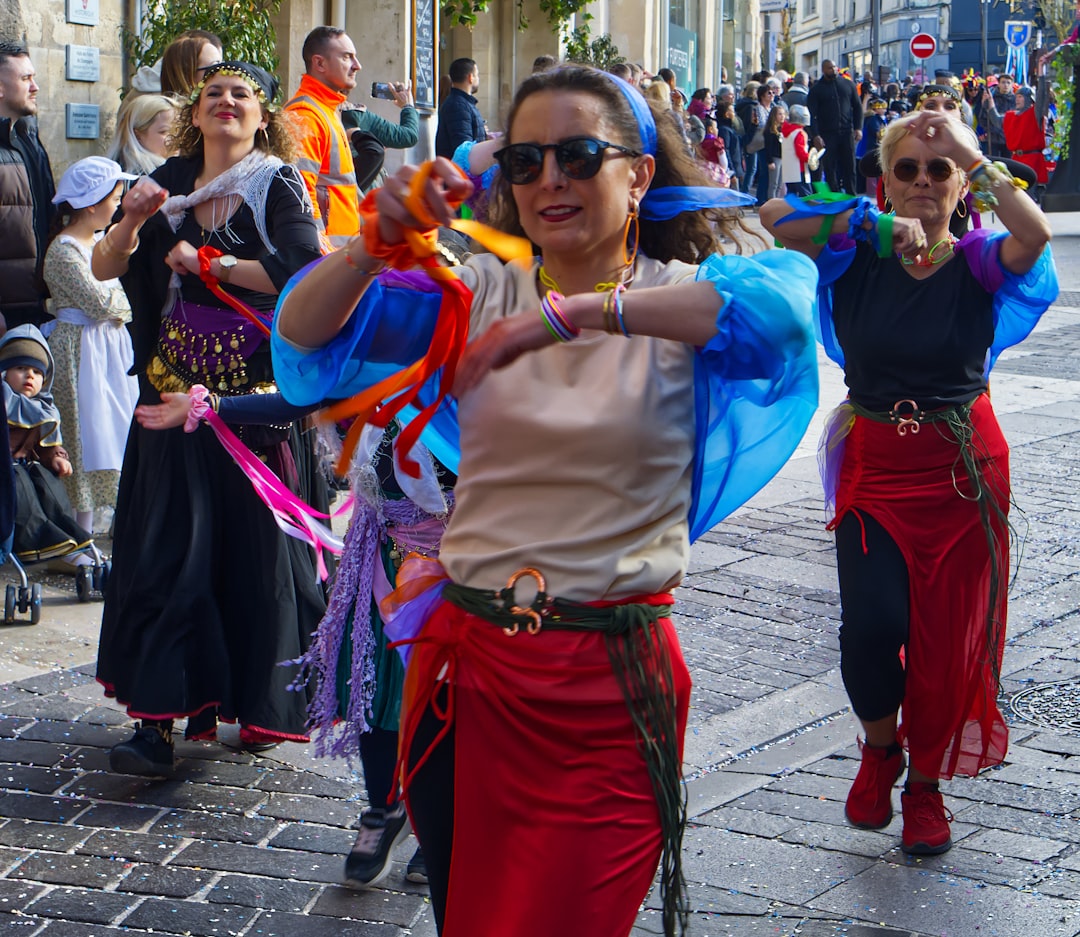
A performer in traditional Moroccan costume taking part in a street parade during Fête du Trône celebrations

Conclusion: go where the celebration takes you

Fête du Trône rewards the visitor who moves with curiosity rather than a fixed schedule. Follow the music down a medina alley. Accept an invitation to watch the royal speech with a local family. Stand under the fireworks in a city square and feel Morocco celebrate itself. Communities come together to encourage unity and national pride, building camaraderie among neighbors. That camaraderie extends to visitors who show genuine respect and interest. Fête du Trône is not a spectacle designed for tourists. It is a living national moment, and the fact that you can walk right into the middle of it is one of the great gifts Morocco offers the open-minded traveler.

Discover more about Fête du Trône

  • Throne Day in Morocco: Dates, History and Traditions (Rove.me)
  • Moroccan Throne Day: History, Traditions and Dates (Beevago)
  • Fête du Trône 2026: Programme et Célébrations (Agenda Maroc)

author avatar
Youssef Alami
Youssef Alami is a Marrakech-born travel writer and sports journalist who has lived in Rabat, Tangier, and Agadir. He covers Morocco's most breathtaking destinations, local hidden gems, and the country's passionate sports culture. Whether it's a road trip through the Atlas Mountains or a guide to the best medina street food, Youssef writes for anyone who wants to discover Morocco beyond the postcard.
See Full Bio
Previous Post

Free trade zones Morocco: investor guide

Next Post

Local talent Morocco: contracts and costs

Related Posts

A performer in traditional costume on stage at the popular arts festival in Marrakech, surrounded by a crowd at night
Culture

Popular arts festival guide Marrakech

03/07/2026
A maalem musician performing at the Morocco festival season in Essaouira, with a crowd gathered around the open-air stage
Culture

Morocco festival season: why June leads

19/06/2026
A woman in traditional dress pours Morocco mint tea from a silver teapot onto an ornate brass tray in a riad courtyard
Culture

Mint tea: 6 best ceremonial tea rooms

08/06/2026
Crowd gathering at the main stage on Place Moulay Hassan during the Gnaoua Festival Essaouira at night
Culture

Gnaoua Festival: Morocco Essaouira Guide

02/06/2026
_Aerial view of Rabat Morocco showcasing modern architecture and the Royal Theatre Rabat site along the riverfront
Culture

Royal Theatre Rabat Redefines Morocco’s Culture

04/05/2026
Next Post
A professional reviewing an employment contract while hiring local talent in Morocco at a modern Casablanca office

Local talent Morocco: contracts and costs

Leave a Reply Cancel reply

Your email address will not be published. Required fields are marked *

No Result
View All Result

Our Focus

MAwebzine is your international window on Morocco: lifestyle, business, culture, sports and events for a global audience drawn to the kingdom's rich heritage and modern ambition.

Our Readers

MAwebzine addresses readers who engage with Morocco at a high level: professionally, financially, strategically, and as decision-makers in their fields.

Our Approach

Lifestyle, culture, and investment are integrated as context and indicators of economic transformation, regional positioning, and Morocco's growing international profile, not standalone entertainment.

Recent Post

  • Evening ritual for Morocco’s hot nights
  • Moroccan pottery villages near Fès

© 2026 MAwebzine by NOOR & NOOR — part of WEBZINE.world.

Welcome Back!

Login to your account below

Forgotten Password?

Retrieve your password

Please enter your username or email address to reset your password.

Log In
Manage Consent
To provide the best experiences, we use technologies like cookies to store and/or access device information. Consenting to these technologies will allow us to process data such as browsing behavior or unique IDs on this site. Not consenting or withdrawing consent, may adversely affect certain features and functions.
Functional Always active
The technical storage or access is strictly necessary for the legitimate purpose of enabling the use of a specific service explicitly requested by the subscriber or user, or for the sole purpose of carrying out the transmission of a communication over an electronic communications network.
Preferences
The technical storage or access is necessary for the legitimate purpose of storing preferences that are not requested by the subscriber or user.
Statistics
The technical storage or access that is used exclusively for statistical purposes. The technical storage or access that is used exclusively for anonymous statistical purposes. Without a subpoena, voluntary compliance on the part of your Internet Service Provider, or additional records from a third party, information stored or retrieved for this purpose alone cannot usually be used to identify you.
Marketing
The technical storage or access is required to create user profiles to send advertising, or to track the user on a website or across several websites for similar marketing purposes.
  • Manage options
  • Manage services
  • Manage {vendor_count} vendors
  • Read more about these purposes
View preferences
  • {title}
  • {title}
  • {title}
No Result
View All Result
  • Home
    • Our Authors
    • MAwebzine Readers Club
    • Media Kit
    • Contact
    • Cookie Policy
    • Terms and Conditions
  • News
  • Lifestyle
    • Beauty
    • Kids
    • Interior Decoration
    • Well-being
  • Vibes
  • Culture
  • Sports
  • Travels
  • Business
  • World
  • Local Guide
    • Activities in Morocco
    • Hotels in Morocco
    • Nightlife in Morocco
    • Restaurants in Morocco
    • Services in Morocco
    • Shopping in Morocco
  • APP

© 2026 MAwebzine by NOOR & NOOR — part of WEBZINE.world.

MAwebzine Readers Club

Join the MAwebzine Readers Club!

Read and comment on our blogs, collect Stars and receive gifts from our partners. 

More Info
Register
Log In
Not enough quota to unlock this post
Unlock left : 0
Are you sure want to cancel subscription?
Verified by MonsterInsights
enEnglisharالعربيةdeDeutschesEspañolfrFrançaisnlNederlands