
Moroccan cycling routes rarely appear on the shortlists that fill cycling magazines, yet this country holds terrain that stops experienced riders in their tracks: high passes, empty gorges, and red stone landscapes that change with every kilometre.

Tizi n’Tichka: the benchmark climb of the High Atlas
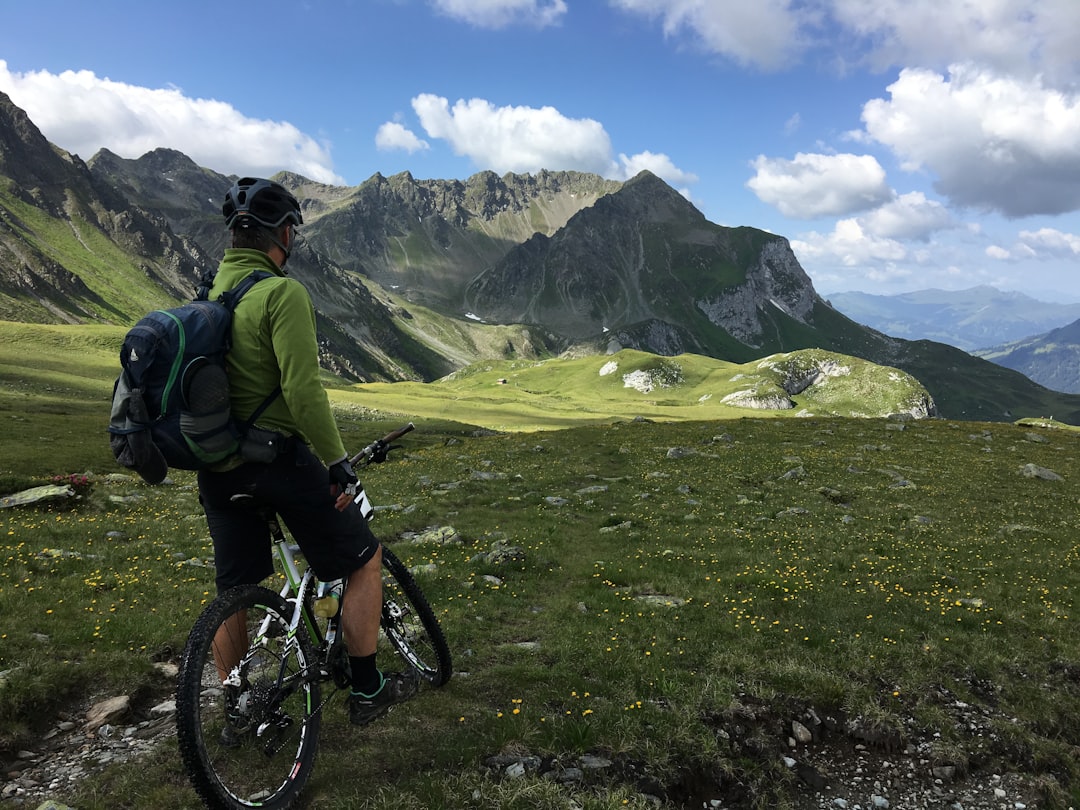
The High Atlas Mountains form the highest mountain range in North Africa, with peaks above 4,000 metres. Tizi n’Tichka is the route every road cyclist in Morocco will hear about first, and it earns that reputation. The pass sits at 2,260 metres, and tarmac roads and gravel trails both offer ways to reach the summit.
The climb from Marrakech gains altitude steadily over roughly 120 kilometres. Traffic is present early in the morning but drops as you rise above the main villages. Most mountain passes in Morocco are sealed but steep, with gradients reaching 10%. Tizi n’Tichka sits squarely in that category and will test any rider who underestimates it.
Tizi n’Test: the quieter alternative that rewards patience
Routes from Marrakech into the High Atlas tackle quiet passes like Tizi n’Test, with long mountain passes, sweeping descents, and quiet roads that reward every metre of elevation gained. This is the route for riders who want the same altitude without the trucks that occasionally use Tichka.
The road south from Marrakech toward Taroudant carries very little traffic by midday. The surface is reliable, and the views across the Souss Valley open up dramatically near the top. Additionally, the descent on the southern side is one of the most technical and satisfying in the country. Plan for a full day and carry enough water, because resupply points are scarce after the first 40 kilometres.
Dades Gorge switchbacks: a gravel rider’s obsession
The Dades Gorge loop from Boumalne Dadès is a difficult 108-kilometre route with significant elevation gain, known for its dramatic switchbacks and towering red rock formations. This route belongs firmly to the gravel category. The upper switchbacks, visible from the valley floor, look impossible from below and feel entirely possible once you are on them.
The P1506 through the Dadès Gorge is surfaced, which makes the lower section accessible for road bikes. However, gravel riders gain the real advantage once they leave the tarmac and climb into the upper gorge. The route winds along hidden trails and mountain roads, offering wide-open views of red canyons, deep green valleys, and snow-capped peaks in the distance.
What local cycling guides say about riding in Morocco
Morocco’s terrain demands honesty from every rider who comes here. The climbs look manageable on a map and then reveal a completely different character once you are in the saddle. The surfaces change quickly: you begin on tarmac, move onto piste, and find yourself on a dry riverbed within a single stage. A gravel bike with wide tyres handles this best, but preparation matters far more than equipment. Riders who study the elevation, carry water for four hours without resupply, and start before 7 a.m. finish strong. Those who do not respect the altitude and the midday heat rarely complete the hardest passes. The reward, at the top of any High Atlas col, is a silence and a view that very few cyclists ever see.
Industry perspective, cycling and adventure tourism professionals in Morocco
Ounila Valley: gravel between history and silence
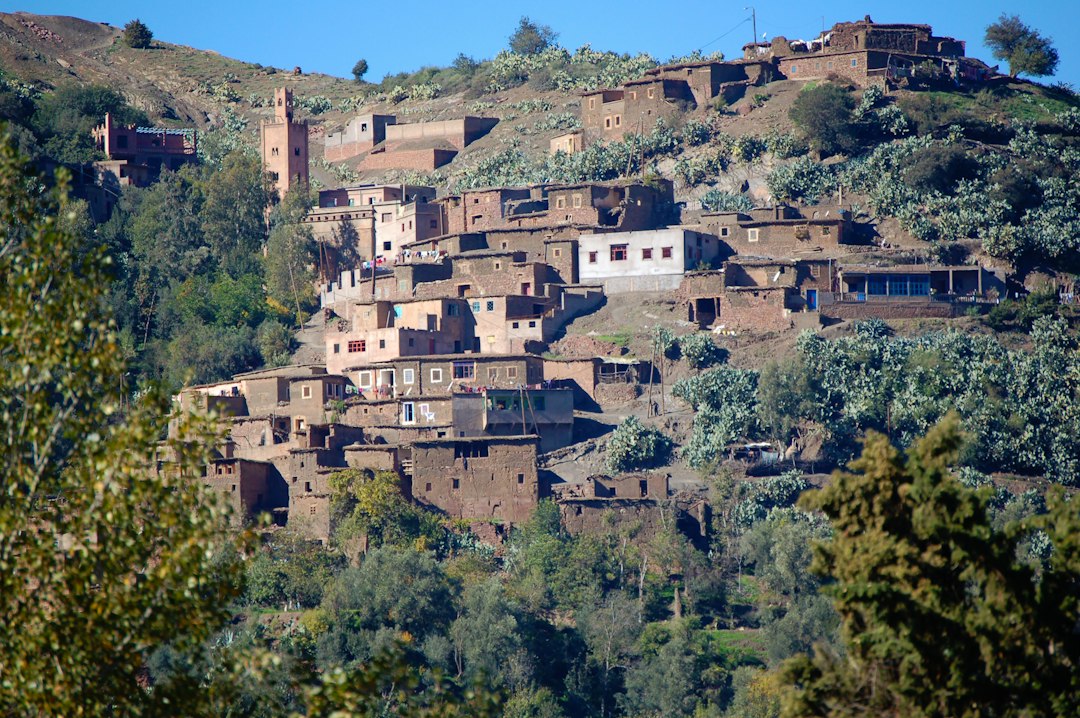
The route through the red-rock Ounila Valley follows a mix of compact gravel and rocky trails, with short climbs and twisting descents between Berber hamlets carved into the ochre cliffs. This corridor connects Aït Benhaddou to Telouet, two of the most significant historical sites in southern Morocco. The Ounila Valley loop from Aït Benhaddou offers panoramic views and a substantial climb.
The surface is mostly firm gravel with loose sections on the upper approaches. Riders on 35mm tyres or wider will feel confident throughout. Furthermore, the route is almost free of motor traffic, which makes it one of the most peaceful rides in the entire country.
-





Jebel Saghro and the southern Anti-Atlas
The Guided Great South Morocco Mountain Bike Tour includes hilly gravel roads, southern Morocco landscapes, the Draa Valley, Jebel Saghro, and desert-edge scenery. Jebel Saghro sits between the High Atlas and the Sahara, in a climate zone that stays cooler than the desert floor but warmer than the passes above. This balance makes it one of the most comfortable climbs in Morocco outside the peak summer months.
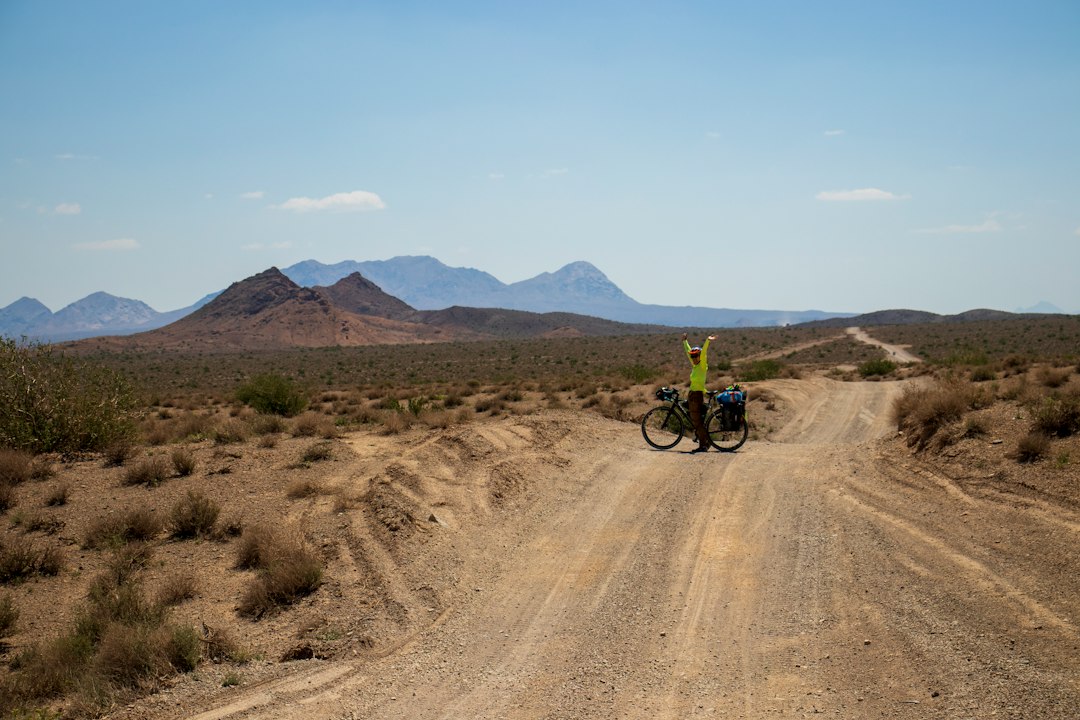
Many routes use dirt roads, rough backroads, village tracks, dry valleys, and desert-edge terrain where the scenery changes from mountain foothills to open plateaus. The Saghro massif covers all of these surfaces in a single loop. Riders who complete it typically describe the volcanic rock formations as unlike anything they have seen elsewhere in North Africa.
Route of Caravans: Moroccan cycling at its most ambitious
The 770-mile Route of Caravans South is the first half of a Morocco Traverse bikepacking route. Beginning within Tiznit’s old medina, the route mostly follows dirt roads and pistes as it climbs into the Anti-Atlas, then dips into the Sahara and follows caravan passages through oases and arid hills before ascending the mighty Atlas.
The Morocco Traverse runs from Tiznit to Tangier, named simply North and South, and since its launch in autumn 2024 on Bikepacking.com, the route has seen high demand and strong feedback. For riders who want to commit fully, this is the definitive Moroccan cycling challenge.
Start riding Morocco beyond the postcard
Moroccan cycling offers a range of terrain that few countries in the world can match within a single trip. These 6 routes cover the serious climbs, the quiet gravel passes, and the remote gorges that most visitors never reach. Whether you choose 1 pass or chain all 6 into a multi-week journey, Morocco will test your legs and give you landscapes that stay with you long after you leave. Plan well, start early on every riding day, and let the country reveal itself at the pace that only Moroccan cycling allows.
Discover more about Moroccan cycling
- Morocco Traverse South (Route of Caravans), Bikepacking.com
- Visit Morocco, Official Tourism Website of Morocco
- A Trip Through Morocco via Mountain Bike, NPR, June 2025