


Moroccan mountain villages hold a secret that the coast cannot match: while July pushes seaside temperatures above 40°C, the highlands breathe cool air, smell of wild herbs, and move at a pace that changes everything.
Imlil: the gateway that earns its reputation
Imlil sits at 1,740 metres in the High Atlas, about 60 kilometres south of Marrakech. That altitude alone drops the temperature by roughly 10 to 15 degrees compared to the city below. Walnut trees line the valley paths, and terraced fields climb the slopes in careful green steps. You feel the difference the moment you step out of the car.

From Imlil, trails reach into Berber communities that have little connection to the tourist economy of Marrakech. Local guides lead you through villages where families dry figs on flat rooftops and bake bread in clay ovens. Trekking here is not a performance. It is a walk through a living place.
Guesthouses in Imlil serve dinner at long communal tables, and the nights are cold enough for a blanket. That alone makes July here feel like a different country.
Chefchaouen: blue walls and mountain cool
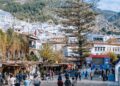
Chefchaouen stands in the Rif Mountains at around 600 metres, and summer temperatures stay comfortable even in the hottest weeks. The famous blue-painted lanes trap shade and channel mountain breezes through the medina. Mornings here feel almost European: quiet, bright, and cool.
Beyond the photographs, Chefchaouen rewards those who walk. The path to the Spanish Mosque takes about 20 minutes and opens a wide view over the blue city and the surrounding forest. The springs at Ras El Maa, at the edge of the medina, run cold and clear from the mountain above.
Accommodation fills fast in July, so book at least 3 weeks ahead. The reward is a base that stays fresh when every coastal city to the north has become uncomfortable.
Ifrane: the village that surprises everyone
Ifrane sits at 1,665 metres in the Middle Atlas and looks like nothing else in Morocco. Red-roofed stone buildings, trimmed parks, and cedar forests surround a town that was built during the French Protectorate period as a mountain retreat. In July, temperatures rarely climb above 25°C here.
The forests around Ifrane shelter one of the last wild populations of Barbary macaques in North Africa. A walk into the cedar groves takes you past these animals at close range, often in family groups on the roadside. The contrast with the desert landscape most visitors associate with Morocco is total.
Ifrane also connects easily to the Azrou cedar forest and the lakes at Dayet Aoua. Together, they form a small circuit of altitude, shade, and silence that very few international travelers reach.

What guides who know these mountains say
Mountain villages in Morocco are not a backup plan for travelers who want to avoid the heat. They are the destination. The altitude changes the air, the light, and the pace of everything. When you sit on a guesthouse terrace at 1,800 metres and watch clouds form over a valley below you, you understand why Berber communities built their lives here and not on the plains. Trekking in July is also practical: the paths are dry, the rivers are low enough to cross safely, and the visibility from the high passes is extraordinary. The challenge is that many international visitors still think of Morocco as a hot, flat country. The mountains are a completely different Morocco, and July is one of the best months to find it, because the crowds that fill coastal resorts simply never come up here.
Industry perspective, mountain trekking and sustainable tourism professionals in Morocco
Ait Bouguemez: the valley that takes effort and gives more back
Ait Bouguemez sits deep in the Central High Atlas at around 1,900 metres. The road to reach it winds through dramatic gorges and takes time. That effort protects the valley from casual day-trippers and keeps the atmosphere genuinely local.
The valley is wide, green, and ringed by peaks above 3,000 metres. Farmers grow barley and raise sheep on terraced slopes that have been worked for generations. Trekking routes cross high passes toward the M’Goun Massif, which holds Morocco’s second-highest peak at 4,071 metres.
Accommodation here is simple: family-run gîtes with thick mud-brick walls, traditional rugs, and meals cooked on wood fires. The simplicity is the point. Ait Bouguemez is the most complete version of what Moroccan mountain life actually looks like.




Talat N’Yaaqoub: the quiet village worth finding
Talat N’Yaaqoub sits in the Nfis Valley southwest of Marrakech, below the Toubkal massif but far enough off the main trekking routes to stay quiet. The village sits at around 1,200 metres and connects to a network of paths through walnut and almond groves.
Few international visitors come here, which means the welcome is genuine and the trails are uncrowded. Local families offer simple meals and basic rooms. The river below the village runs fast enough in July to sit beside and feel the cold air it carries.
This is Moroccan mountain life at its least filtered: no curated experience, no organized route. Just altitude, Berber hospitality, and the sound of water moving through stone.
Plan your trip to Moroccan mountain villages
Moroccan mountain villages offer the best version of July travel in this country. You gain altitude, lose heat, and find a Morocco that most visitors photograph from a distance but never actually enter. Pack layers: mornings at 1,800 metres are cool even in summer, and evenings require a jacket.
Book guesthouses directly when possible, hire a local guide for trekking routes above 2,500 metres, and carry enough water for each day on the trail. These Moroccan mountain villages are not remote in a dangerous sense. They are simply far enough from the coast to stay cool, alive, and worth every kilometre of the drive.

Discover more about Moroccan mountain villages
- Visit Morocco: Mountains and Nature (Moroccan National Tourist Office)
- Morocco Tourism Market Report 2026 (Mordor Intelligence)
- Morocco’s Tourism Boom Leaves Quake-Hit High Atlas Behind (The Traveler, March 2026)