

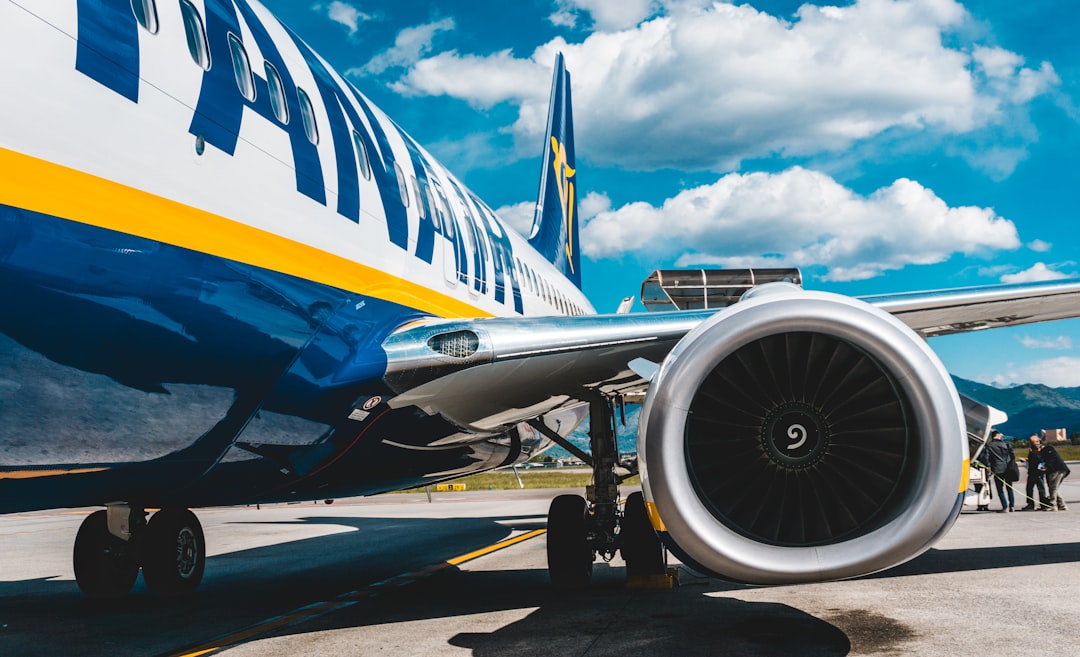
Ryanair is pulling back sharply from Belgium this winter, and Moroccan destinations are squarely in the firing line. The Irish low-cost carrier has confirmed a sweeping reduction of its Belgian schedule for the 2026-2027 winter season, a move that directly threatens several routes connecting Belgium to Morocco. Travelers planning winter trips to the kingdom from Charleroi or Brussels Airport should pay close attention to what comes next.
The scale of the cuts
The restructuring involves the withdrawal of five aircraft, specifically Boeing 737-800 or 737 MAX 8-200 jets, currently based at Charleroi-Brussels South Airport, bringing Ryanair’s local fleet from 18 down to 14 aircraft. This translates to the elimination of approximately one million seats on the Belgian market for the winter 2026-2027 season, representing a reduction of around 22% of Ryanair’s passenger traffic in the country. The plan also involves the closure of twenty routes in total, thirteen departing from the Walloon hub at Charleroi and seven from Brussels-Zaventem. Concretely, those twenty routes will no longer operate year-round. Instead, they will be concentrated on the peak summer season and suspended entirely during the winter 2026-2027 period. The airline frames this as a “seasonalization” rather than a permanent closure, but for passengers who rely on affordable winter fares, the practical effect is the same: far fewer seats at far higher prices.

Morocco routes facing disruption
According to Bladi.net, Marrakech is among the lines affected at Brussels Airport, while from Charleroi, several Moroccan destinations are also cited among the impacted routes, including Essaouira, Nador, Oujda, and Tétouan. Although the precise list of cancelled destinations has not yet been made fully public, this massive contraction in capacity is causing particular concern for travelers to Morocco, given that Charleroi has historically served as a key hub for flights to Tangier, Oujda, Nador, and Rabat. For the large Moroccan diaspora community in Belgium, Ryanair’s affordable connections have long been a vital link to family and home. A significant reduction in winter frequency will force many travelers to book further in advance, pay more, or travel via alternative airports.

The tax dispute driving the decision
At the core of Ryanair’s decision is Belgium’s federal passenger tax, which came into force in 2022. Each airline ticket issued for a departure from a Belgian airport carries a surcharge of between two and ten euros, depending on flight distance, with the maximum rate applying to routes shorter than 500 km. A budget agreement further plans to raise this tax to ten euros for all flights departing from 2027, with additional increases scheduled for short-haul routes in subsequent years. Ryanair has been pressing Belgian authorities, arguing that these taxes make departures from Belgium less competitive than those from other European countries. The low-cost carrier has even raised the prospect of a total reduction of more than two million seats over two years if the fiscal environment does not improve. Ryanair CEO Michael O’Leary has consistently warned that Belgium is moving against the broader European trend, where other governments are actually lowering aviation taxes to stimulate traffic growth.
Wider consequences for airports and passengers
Christophe Segaert, CEO of BSCA, the company that manages Charleroi-Brussels South Airport, confirmed to Mobilithib that “the forecasts we have received from Ryanair for this winter are not good at all.” The seasonalization of twenty routes and the removal of more than one million seats from winter 2026-2027 are expected to mechanically weigh on passenger traffic, local employment, and airport revenues. Ryanair has also flagged a risk to thousands of jobs and a potential withdrawal of 500 million dollars in investment. Other carriers, including Brussels Airlines, have warned that they too will need to pass increased costs on to ticket prices. This fare inflation risks diverting part of the traffic toward cross-border airports such as Lille or Eindhoven, reshaping the travel habits of the Moroccan diaspora.
What travelers should do now
For travelers heading to Morocco, close monitoring of the winter 2026-2027 flight schedules is now essential. If these reductions are confirmed in booking systems, some Moroccan cities could become significantly less accessible from Belgium outside the summer season. Passengers with existing bookings on affected routes should check directly with Ryanair for updates and consider flexible fare options where possible. Those planning travel to Marrakech, Nador, Essaouira, Oujda, or Tétouan this winter should book early to secure remaining seats before capacity shrinks further. Alternative carriers operating on Belgium-Morocco corridors may also become relevant options, though they are unlikely to match Ryanair’s historically low fares on these routes.
Based on reporting by Bladi.net (bladi.net)