
CONTACT
  • Login
Upgrade
MAwebzine
Advertisement
  • Home
    • Our Authors
    • MAwebzine Readers Club
    • Media Kit
    • Contact
    • Cookie Policy
    • Terms and Conditions
  • News
  • Lifestyle
    • Beauty
    • Kids
    • Interior Decoration
    • Well-being
  • Vibes
  • Culture
  • Sports
  • Travels
  • Business
  • World
  • Local Guide
    • Activities in Morocco
    • Hotels in Morocco
    • Nightlife in Morocco
    • Restaurants in Morocco
    • Services in Morocco
    • Shopping in Morocco
  • APP
  • Home
    • Our Authors
    • MAwebzine Readers Club
    • Media Kit
    • Contact
    • Cookie Policy
    • Terms and Conditions
  • News
  • Lifestyle
    • Beauty
    • Kids
    • Interior Decoration
    • Well-being
  • Vibes
  • Culture
  • Sports
  • Travels
  • Business
  • World
  • Local Guide
    • Activities in Morocco
    • Hotels in Morocco
    • Nightlife in Morocco
    • Restaurants in Morocco
    • Services in Morocco
    • Shopping in Morocco
  • APP
No Result
View All Result
MAwebzine
No Result
View All Result
Home Creativity

Zellige tilework in modern Moroccan design

From the medinas of Fez to contemporary interiors, zellige tilework is rewriting the rules of modern Moroccan design.

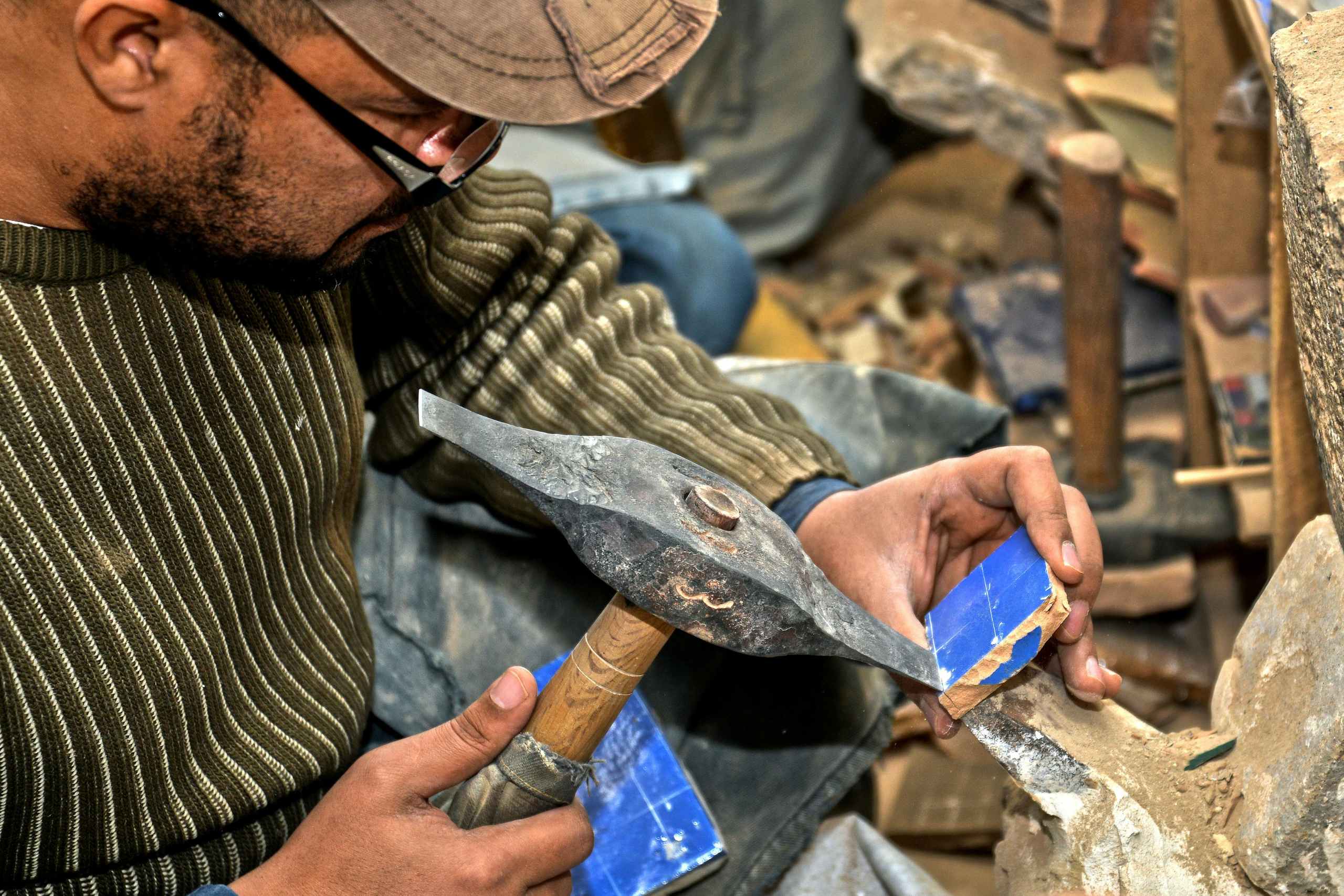
Close-up of a craftsman sharpening a blade on a stone, wearing a striped sweater and cap, with wooden tool handles nearby.

Zellige tilework lights up every surface it touches, and right now it is doing something remarkable: it is leaving the ancient medinas of Fez and finding its way into the boldest modern Moroccan interiors on earth.

The ancient roots of zellige tilework

The story of zellige begins over 1,000 years ago, in the city of Fez, Morocco. Because Islam discourages the portrayal of living things, artisans created geometric patterns as a form of artistic expression, turning walls, floors, and fountains into vibrant mosaics. The result was a visual language built entirely from mathematics and color.

This period saw the evolution of distinctive geometric designs, including stars, polygons, and interlaced forms that became emblematic of zellige tilework. Early Moroccan tiles were plain shades of white and brown. During the Nasrid and Marinid dynasties in the 14th century, more vibrant colors of green, blue, and yellow joined the palette. Each new color added a new dimension to the craft.

Many artisans learn the craft from family members at a very early age, so these skills, expertise, and art pass across multiple generations. The name “zellige” comes from the Arabic word meaning “to slide,” a reference to the tile’s glassy glaze and smooth finish. Even the language around the craft carries history inside it.

What makes zellige a living mosaic art

Zellige tiles are handcrafted from natural clay, glazed, and fired in traditional kilns. Their irregular surfaces and subtle color variations create a look that is impossible to replicate with machine-made tiles. This imperfection is precisely the point. Every surface that carries zellige carries a human signature.

The creation of zellige involves a meticulous and labor-intensive process that has remained largely unchanged for centuries. The first step is the molding and shaping of clay, done entirely by hand. The high-gloss finish of zellige tiles enhances their look, catching and reflecting light in a way that other types of tiles cannot match. When light moves across a zellige wall, the wall seems to move with it.

Because zellige tiles are handmade, no 2 pieces are exactly alike. The slight color and size variations give the tiles a rustic and distinct appearance. For designers who want a surface that tells a story, this quality is not a flaw. It is the entire value proposition.

Install the MAwebzine App
Always stay up to date with the latest news from Morocco.
Install now →

How zellige tilework shapes the modern riad

The riad is the natural home of zellige. Walk through the entrance of any great riad in Marrakech or Fez and the first thing you see is a courtyard floor covered in geometry. Throughout history, zellige tile has been featured in Moroccan architecture. From palace walls to the peaceful inner gardens of riads, these tiles piece together mesmerizing mosaics that showcase Morocco’s rich cultural heritage.

In recent years, zellige tile has experienced a design resurgence. Homeowners, architects, and interior designers around the world have rediscovered its unique texture, irregularity, and luminous quality. Moreover, that resurgence is strongest inside Morocco itself, where a new generation of designers refuses to treat zellige as a museum piece.

The inspiration drawn from tradition means that zellige can be adapted to interiors with a vintage style, while also fitting naturally in contemporary and minimal interiors, where it becomes a decisive stylistic counterpoint. A single wall of deep-blue zellige in an otherwise white room is one of the most powerful design statements in modern Morocco.
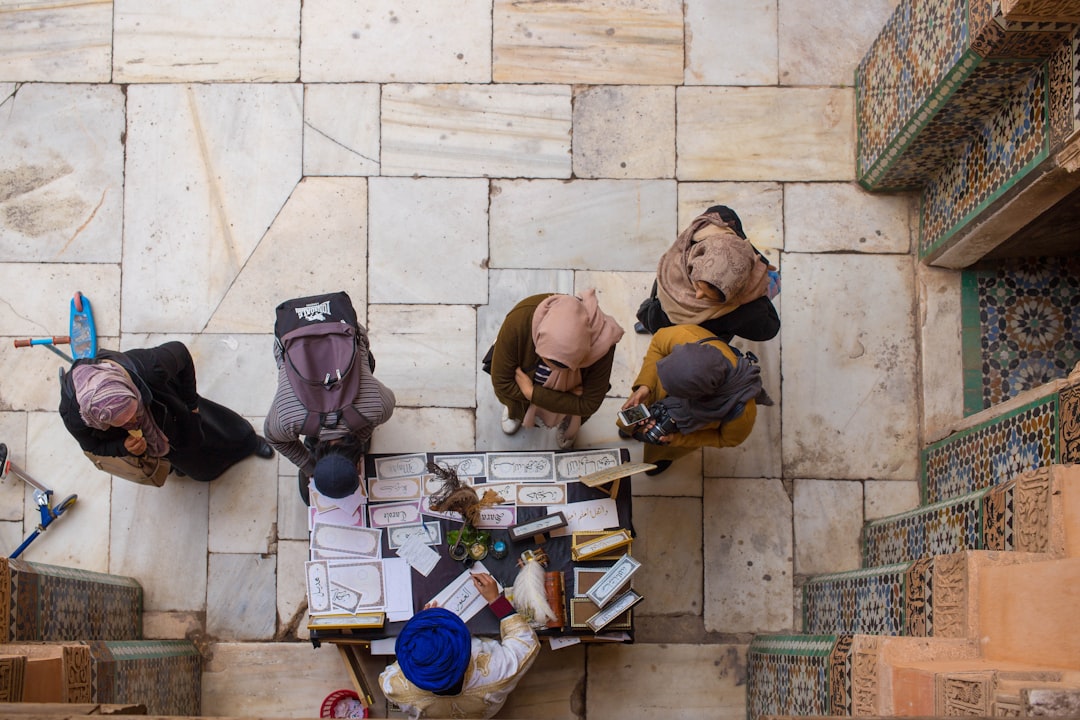
A woman admiring a colorful zellige tilework wall inside a traditional Moroccan riad courtyard

Expert perspective on zellige tilework and cultural identity

Zellige is not a decorative trend. It is a recorded language, one that Moroccan artisans have spoken in geometry and glaze for over a thousand years. When a designer places authentic zellige in a modern space, they are not importing an aesthetic. They are continuing a conversation. The craft demands precision because every chip must lock against its neighbor without error. Yet within that precision lives enormous freedom: freedom of color, pattern, and scale. What we see today in contemporary Moroccan interiors is not a revival. It is an evolution. The craft never stopped. It simply found new walls to speak on.

Industry perspective, craft heritage and design professionals in Morocco

-

A Moroccan calligraphy artist holds a reed pen over paper covered in flowing Arabic script

Moroccan calligraphy artists to discover

02/07/2026
A maalem performs for a large crowd at the Gnaoua festival in Essaouira, Morocco

Gnaoua festival: your guide to Essaouira

25/06/2026
Traditional Moroccan doors featuring historic carved woodwork in medina for restoration and preservation

Traditional Moroccan Doors: Restoring Historic Woodwork

11/02/2026
Moroccan tilework featuring traditional zellige geometric patterns for DIY home décor projects

Moroccan Tilework DIY: Zellige Projects

14/01/2026
moroccan-pottery-artist

From Passion to Profession: Turning Creative Skills into Income

01/10/2025
potatoes growing techniques guide

A comprehensive guide with video for growing potatoes

12/02/2025

Zellige tilework in contemporary spaces beyond the medina

Homeowners and interior designers now use zellige tile in kitchen and bathroom backsplashes, shower walls, decorative niches, and fireplace surrounds. The craft has crossed from the medina into the apartment, the hotel lobby, and the restaurant wall. Furthermore, it has crossed borders entirely.

Mixing matte and glossy zellige tiles in a single backsplash or wall design adds visual depth and a modern artisan look. Colors like emerald, sapphire, and deep aqua are trending in Moroccan-inspired kitchens and bathrooms. Vertical stacking of zellige tiles creates a modern, sleek aesthetic, ideal for small kitchen backsplashes and bathroom walls.

Meanwhile, the question of authenticity has moved to an international stage. Morocco registered zellige with the World Intellectual Property Organization and explored patent protection in 2022. Then, in 2024, the Culture Minister met with the WIPO Director General to reinforce these efforts and ensure that local artisans benefit from their heritage. Morocco is also preparing a zellige application for the 2027 UNESCO intangible heritage cycle. Protection and design go hand in hand.
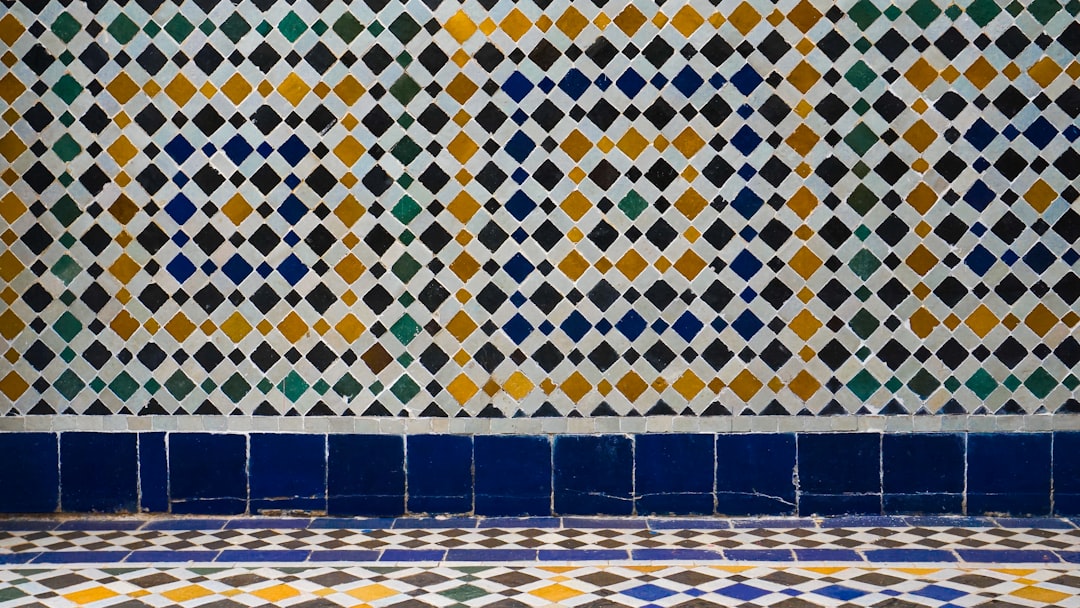
An interior designer presenting a modern kitchen featuring a deep-blue zellige tilework backsplash

Zellige tilework is Morocco’s boldest design statement

Zellige tilework is not a look you borrow. It is a practice you respect. The revival of interest in traditional crafts and the appreciation for handmade artistry have contributed to the continued relevance of zellige in today’s design landscape. Its ability to blend with both traditional and modern aesthetics makes it a versatile and enduring choice.

Every fragment of zellige tilework carries the weight of a thousand years of Moroccan creativity. When you stand inside a room where these tiles cover the walls, you feel that weight. It does not crush you. It lifts you. Go find a workshop in the medina of Fez. Watch an artisan cut a tile by hand. Then you will understand why no machine will ever replace this art. Share what you discover, and bring more people here.

Discover more about zellige tilework

  • Morocco Moves to Safeguard Zellige as UNESCO Heritage Debate Continues
  • Protecting Morocco’s Cultural Heritage: Zellige Safeguarded with WIPO Support
  • Moroccan Zellige Tiles Guide: History, Workshops and Buying Tips

author avatar
Youssef Alami
Youssef Alami is a Marrakech-born travel writer and sports journalist who has lived in Rabat, Tangier, and Agadir. He covers Morocco's most breathtaking destinations, local hidden gems, and the country's passionate sports culture. Whether it's a road trip through the Atlas Mountains or a guide to the best medina street food, Youssef writes for anyone who wants to discover Morocco beyond the postcard.
See Full Bio
Previous Post

Moroccan dishes that are naturally gluten-free

Next Post

Moroccan drinks to beat the June heat

Related Posts

A Moroccan calligraphy artist holds a reed pen over paper covered in flowing Arabic script
Creativity

Moroccan calligraphy artists to discover

02/07/2026
A maalem performs for a large crowd at the Gnaoua festival in Essaouira, Morocco
Creativity

Gnaoua festival: your guide to Essaouira

25/06/2026
Traditional Moroccan doors featuring historic carved woodwork in medina for restoration and preservation
Creativity

Traditional Moroccan Doors: Restoring Historic Woodwork

11/02/2026
Moroccan tilework featuring traditional zellige geometric patterns for DIY home décor projects
Creativity

Moroccan Tilework DIY: Zellige Projects

14/01/2026
moroccan-pottery-artist
Creativity

From Passion to Profession: Turning Creative Skills into Income

01/10/2025
Next Post
A woman performing the traditional high-pour ritual of Moroccan drinks, serving atay into small glasses in a sunlit courtyard

Moroccan drinks to beat the June heat

Leave a Reply Cancel reply

Your email address will not be published. Required fields are marked *

No Result
View All Result

Our Focus

MAwebzine is your international window on Morocco: lifestyle, business, culture, sports and events for a global audience drawn to the kingdom's rich heritage and modern ambition.

Our Readers

MAwebzine addresses readers who engage with Morocco at a high level: professionally, financially, strategically, and as decision-makers in their fields.

Our Approach

Lifestyle, culture, and investment are integrated as context and indicators of economic transformation, regional positioning, and Morocco's growing international profile, not standalone entertainment.

Recent Post

  • Kids cool in Morocco’s summer heat
  • Atlantic coast Morocco digital nomads

© 2026 MAwebzine by NOOR & NOOR — part of WEBZINE.world.

Welcome Back!

Login to your account below

Forgotten Password?

Retrieve your password

Please enter your username or email address to reset your password.

Log In
Manage Consent
To provide the best experiences, we use technologies like cookies to store and/or access device information. Consenting to these technologies will allow us to process data such as browsing behavior or unique IDs on this site. Not consenting or withdrawing consent, may adversely affect certain features and functions.
Functional Always active
The technical storage or access is strictly necessary for the legitimate purpose of enabling the use of a specific service explicitly requested by the subscriber or user, or for the sole purpose of carrying out the transmission of a communication over an electronic communications network.
Preferences
The technical storage or access is necessary for the legitimate purpose of storing preferences that are not requested by the subscriber or user.
Statistics
The technical storage or access that is used exclusively for statistical purposes. The technical storage or access that is used exclusively for anonymous statistical purposes. Without a subpoena, voluntary compliance on the part of your Internet Service Provider, or additional records from a third party, information stored or retrieved for this purpose alone cannot usually be used to identify you.
Marketing
The technical storage or access is required to create user profiles to send advertising, or to track the user on a website or across several websites for similar marketing purposes.
  • Manage options
  • Manage services
  • Manage {vendor_count} vendors
  • Read more about these purposes
View preferences
  • {title}
  • {title}
  • {title}
No Result
View All Result
  • Home
    • Our Authors
    • MAwebzine Readers Club
    • Media Kit
    • Contact
    • Cookie Policy
    • Terms and Conditions
  • News
  • Lifestyle
    • Beauty
    • Kids
    • Interior Decoration
    • Well-being
  • Vibes
  • Culture
  • Sports
  • Travels
  • Business
  • World
  • Local Guide
    • Activities in Morocco
    • Hotels in Morocco
    • Nightlife in Morocco
    • Restaurants in Morocco
    • Services in Morocco
    • Shopping in Morocco
  • APP

© 2026 MAwebzine by NOOR & NOOR — part of WEBZINE.world.

MAwebzine Readers Club

Join the MAwebzine Readers Club!

Read and comment on our blogs, collect Stars and receive gifts from our partners. 

More Info
Register
Log In
Are you sure want to unlock this post?
Unlock left : 0
Are you sure want to cancel subscription?
Verified by MonsterInsights
enEnglisharالعربيةdeDeutschesEspañolfrFrançaisnlNederlands