
Autumn cooking in Morocco carries a feeling that arrives before the temperature drops, a shift you notice first at the souk, where the fruit stalls change overnight and your shopping list rewrites itself.

How the souk becomes the season’s first signal
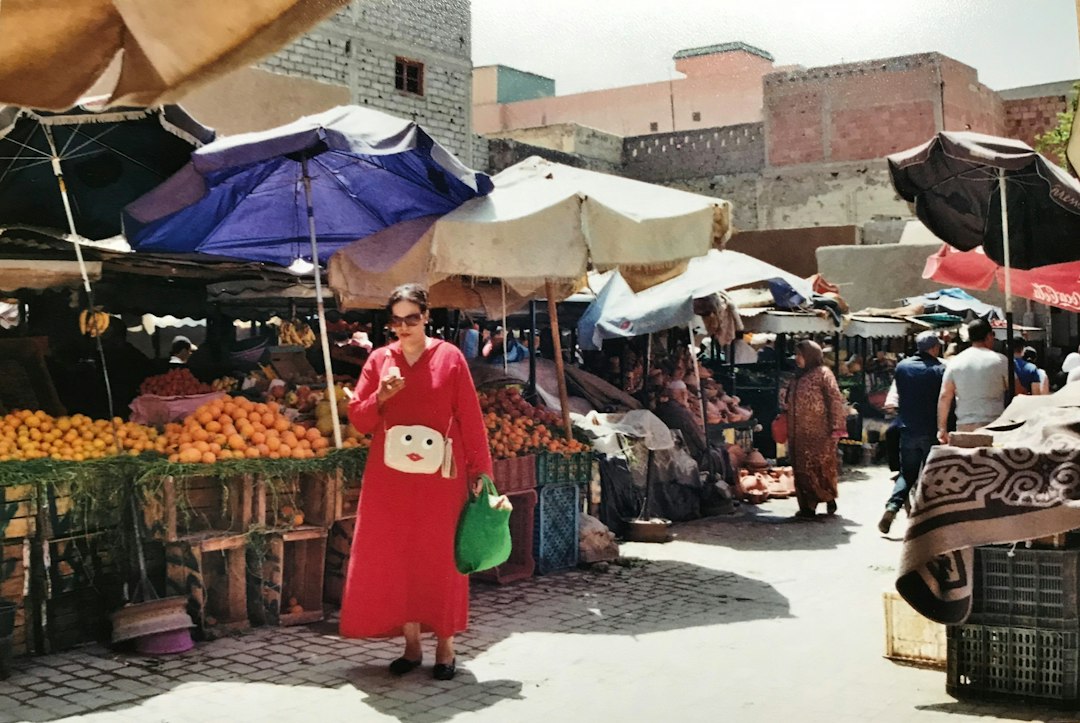
Every Moroccan cook knows this moment. You arrive at the market expecting the same summer display, and instead you find figs piled in open crates, their skins split just enough to show the sweetness inside. The tomato vendors are still there, but their tables are smaller now. Something has changed, and the souk is telling you so.
Morocco’s markets are not stocked in the way a supermarket is stocked. They are harvested. What you find in the souk today is what came out of the ground that morning. This is the foundation of how Moroccan home cooks think about food. The souk is not a destination for a fixed shopping list. It is a conversation, and September speaks with particular clarity.
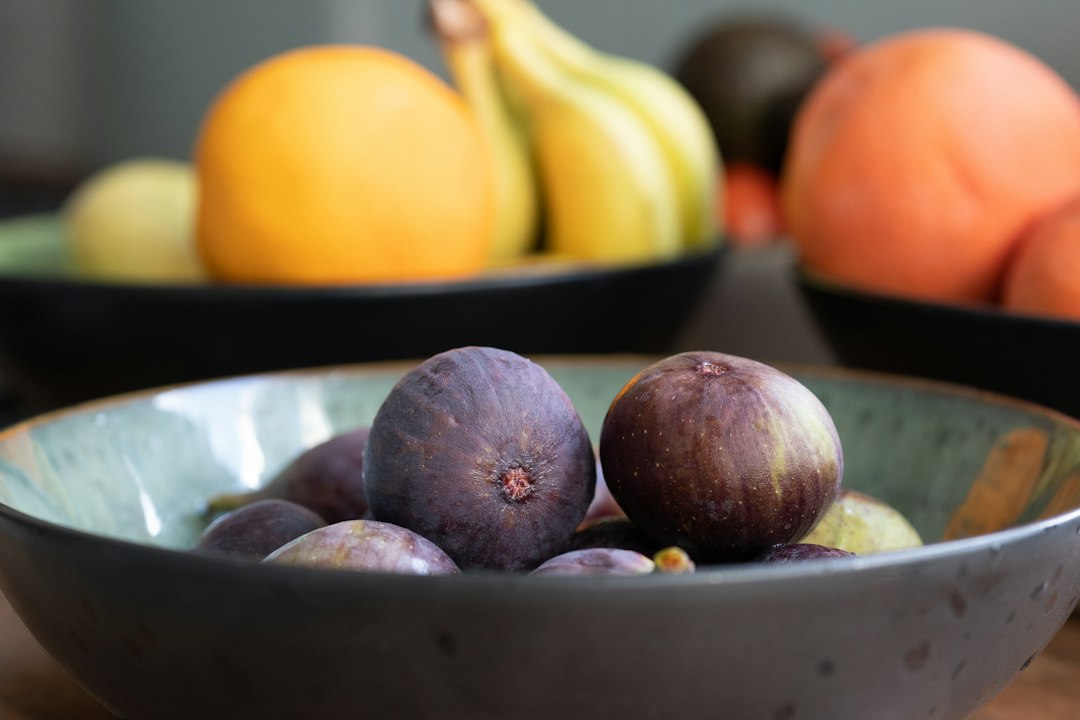
The fig is a sweet, generous, and timeless fruit that announces the arrival of autumn in Morocco’s culture. For many families, the first fig of the season is a small ritual. You buy a handful, you eat 1 or 2 on the walk home, and you start thinking about what else belongs on the table now.
What September brings to the Moroccan table
Tomatoes, peppers, and eggplants are in full production through August and September, vital for both local souks and international export. By September, the shift to cooler-season crops begins, with farmers sowing cabbage, beets, carrots, turnips, and, in cooler areas, spinach and leeks. A skilled home cook reads this shift and adjusts immediately.
September is also harvest season in the Sous Valley, where argan fruit is gathered, cracked, and pressed by women’s cooperatives using techniques unchanged for centuries. Fresh argan oil appears in kitchens at this time of year with a richness that the bottled product rarely matches. Cooks use it over salads, over warm bread, and sometimes directly into a slow tajine.
Most dates are harvested in October, but some pomegranates begin appearing in September. These 2 fruits matter enormously in Moroccan cooking. Pomegranate seeds scatter over salads, couscous dishes, and lamb preparations. Dates move into sweet and savoury combinations that define the richer cooking of the autumn months ahead.
The tajine adapts, and so does the cook
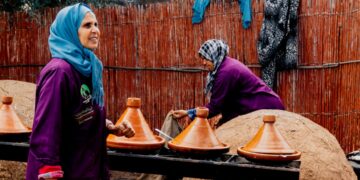
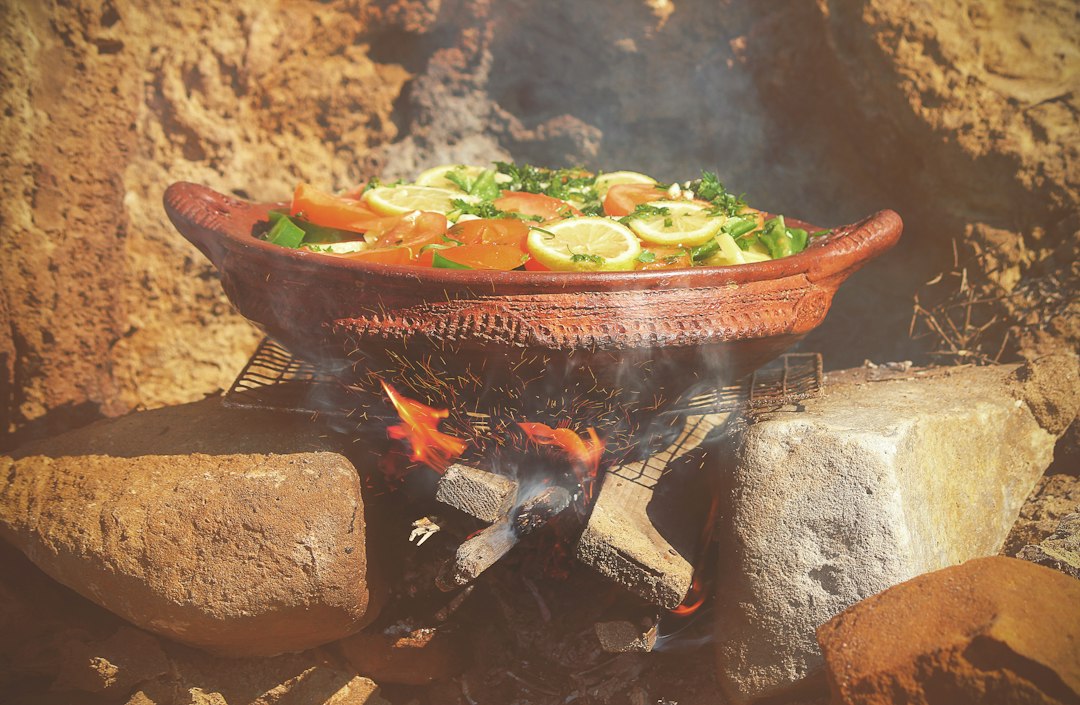
The tajine is the clearest expression of seasonal thinking in Moroccan cooking. It accepts whatever the market offers and transforms it through slow heat, spice, and patience. Summer tajines are lighter, built around tomatoes and peppers. Autumn brings dishes cooked with lamb and almonds, balancing savoury and sweet. Figs, quinces, and dried fruits enter the clay pot alongside preserved lemons and saffron.
Moroccan cuisine is built on layers of spice and texture, with ingredients like preserved lemons, olive oil, harissa, paprika, ginger, turmeric, and saffron infusing warmth and depth into every dish. These spices do not change with the season, but what they surround does. Autumn cooking asks the spice box to do heavier work, to warm root vegetables, to deepen the sweetness of figs, and to carry the earthiness of new-season squash.


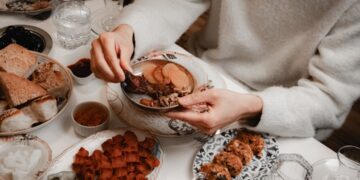
Figs preserved in jams carry the flavour of September throughout the year. Breakfast tables in September are set with fresh figs alongside warm msemen or harcha. This is the home cook’s instinct: enjoy what is fresh now, and preserve what you can for the colder months ahead.
A perspective from Morocco’s food community
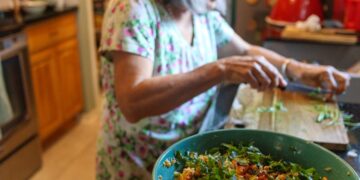
September in a Moroccan kitchen is a moment of rebalancing. The cook who spent summer building light, acidic plates with tomatoes and charmoula must now shift toward warmth, sweetness, and body. Figs enter the tajine, root vegetables come in from the cooler regions, and the argan oil on the shelf gets replaced with a fresh batch from the Sous. This is not a recipe change. It is a rhythm change. The souk imposes it gently but completely. A good cook does not resist that rhythm; she leans into it and lets the market lead. Seasonal cooking in Morocco is not a trend or a philosophy. It is simply what happens when you shop from what the land produces that week, which is the only way most Moroccan home cooks have ever known how to shop.
Industry perspective, food culture and culinary heritage professionals in Morocco
Preserving and planning ahead: the cook’s autumn strategy
Moroccan home cooks think 2 steps ahead of the souk. When figs are abundant and affordable, they cook batches into jam. When pomegranates arrive, they press the seeds and freeze the juice. Mountain guesthouses and family kitchens alike feature fresh, hearty dishes with late-summer fruit and early-harvest vegetables during this period. The goal is always to extend the season beyond its natural end.
Figs enrich Moroccan cuisine in both simple and refined ways: served fresh with mint tea or as a light dessert. But they also dry well, and dried figs become a kitchen staple through winter. The same logic applies to the first squash of autumn, which stores easily and feeds a family across many weeks of tajines, soups, and stuffed preparations.
The market is the calendar. Eat what the souk offers today and you are eating in season, from the region, at the peak. This is the principle that sits under all Moroccan seasonal cooking. It is not written down anywhere in most households. It is simply lived, passed from one generation of cooks to the next at the market stall, at the kitchen counter, and around the table.
Autumn cooking is an invitation to cook with care
Autumn cooking in Morocco is not complicated. It asks only that you pay attention: to what arrives at the souk, to what the season wants you to make, and to what your family has always eaten when September settles in. The figs will not wait. The argan oil is at its freshest. The root vegetables are ready. This is the moment to cook with the most generous ingredients of the year.
If autumn cooking means anything in a Moroccan kitchen, it means trust. Trust the souk. Trust the season. Let the market lead your hand, and the meal will take care of itself. Visit the souk this week with an open basket and no fixed plan, and let September show you what to cook.
Discover more about autumn cooking
- FAO in Morocco: Food, Agriculture, and Seasonal Production
- Moroccan Agricultural Calendar: Seasonal Crops and Harvest Cycles
- What’s in Season in Morocco, Month by Month