
Every summer, hundreds of children from the Moroccan diaspora trade their adopted countries for a few weeks of culture, sport, and memory-making in Morocco. This year, the Hassan II Foundation for Moroccans Living Abroad brings that tradition to its 27th edition, welcoming 960 young participants to its socio-cultural centre in Kénitra. Notably, the programme includes 43 Palestinian children whose full stay is covered by the Foundation.
A flagship programme now in its 27th year
The Cultural Stay organised by the Hassan II Foundation for Moroccans Living Abroad reaches its 27th edition in 2026, running from 4 July to 18 August at the Foundation’s socio-cultural centre in Kénitra. The initiative, which the Foundation has run annually since 1998, has grown into one of the most visible expressions of Morocco’s institutional commitment to its diaspora. Since its launch, the programme has already benefited more than 17,782 children out of a total of 20,607 available places, achieving a completion rate of 91%. That track record makes this year’s edition far more than a routine summer camp. It represents a deliberate, long-running policy of identity reinforcement for young Moroccans growing up abroad, delivered through experience rather than instruction.
Who attends and where they come from
The children who benefit from this year’s programme are aged between 9 and 13 and come from 18 countries: France, Belgium, Spain, Italy, the Netherlands, Germany, the United States, the United Kingdom, Canada, Tunisia, Libya, Saudi Arabia, Jordan, Gambia, Senegal, Côte d’Ivoire, Gabon, and Mauritania. The geographic spread reflects the wide reach of the Moroccan diaspora across Europe, the Americas, Africa, and the Arab world. Among the participants, 43 Palestinian children join the programme this summer, with the Foundation taking full responsibility for the costs of their stay. Their inclusion speaks to a broader solidarity dimension that the Foundation has woven into the programme’s objectives this year, as the conflict in Gaza continues to displace and affect families across the region.
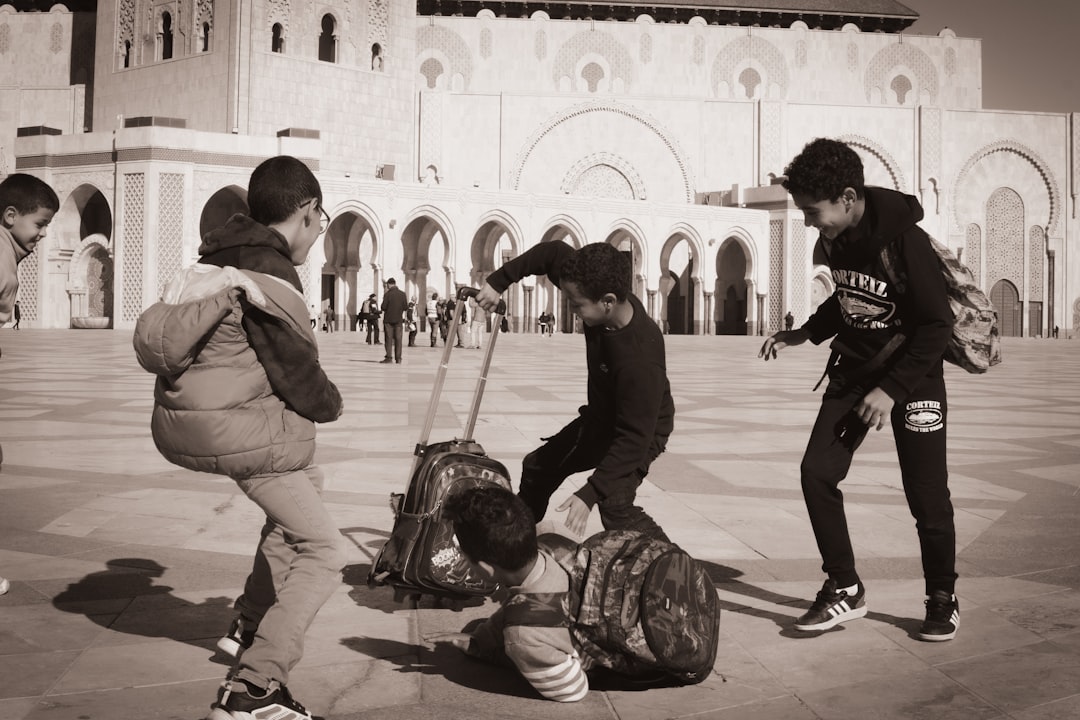
How the programme is structured
The 960 children are received in four consecutive phases: 4 to 13 July, 16 to 25 July, 28 July to 6 August, and 9 to 18 August, with each session bringing together 240 children. This rotation model allows the Foundation’s centre in Kénitra to maximise its capacity while ensuring that each group receives the full programme without overcrowding. The overarching aim is to offer a broader profile of children the chance to build lasting summer memories in their country of origin, with quality care and activities provided for young visitors whose families cannot cover the cost of such a trip independently. The fact that participation carries no fee for families is central to the programme’s equity rationale, ensuring that access to cultural reconnection does not depend on household income.
Activities designed to reconnect diaspora youth with Morocco
Beyond the artistic workshops, participants take part in sports and recreational activities, as well as cooking and gastronomy sessions. On the same site, they explore a pedagogical farm where they can learn more about plant species native to Morocco, and they also receive training in basic first-aid gestures. According to Yabiladi, the programme also incorporates a popular cultural day that recreates the atmosphere of a traditional Moroccan souk, giving children direct, playful contact with local crafts, foods, and dress. Cultural outings to Rabat round out the schedule, with visits to key landmarks giving the young participants a direct sense of Morocco’s history and contemporary cultural life.
A programme anchored in identity and belonging
The deeper purpose of the Cultural Stay sits beyond its activities calendar. This educational and cultural initiative aims to deepen the connection of Moroccan expatriate children to their homeland and strengthen their cultural identity through a summer experience blending entertainment, learning, and exposure to Moroccan heritage. The stay also aims to ground participants in their identity, built on pluralism and diversity. For children who spend most of their lives navigating between two cultures, the programme offers structured time and space to engage with the Moroccan side of that equation. The 27th edition, with its record of consistent delivery and its expanded solidarity dimension through the inclusion of Palestinian children, signals that the Foundation intends to keep scaling both the reach and the meaning of this annual commitment.
Based on reporting by Yabiladi (yabiladi.com)

-