
Morocco is redefining what economic growth looks like in Africa. The Morocco green economy is no longer a long-term ambition. It is an active transformation, backed by national strategy, international financing, and measurable targets across multiple sectors. Indeed, Morocco’s National Strategy for Sustainable Development 2025 to 2035 provides a comprehensive roadmap across energy, water, agriculture, transport, digitalization, legal reform, and sustainable financing. Furthermore, the European Investment Bank signed financing worth 740 million euros in Morocco in 2025, the largest amount recorded since 2012, reflecting the scale of international confidence in this transition. For investors, businesses, and policymakers, the Morocco green economy represents one of the most structured opportunities in the region.
Renewable Energy: The Foundation of Morocco’s Green Transition
Renewable energy remains the most advanced pillar of the Morocco green economy. Morocco’s ambitious goal is to achieve a 52% renewable energy share by 2030, supported by substantial investments in solar and wind projects. The country already ranks first in Africa in the Renewable Energy Country Attractiveness Index.
Solar capacity continues to expand through the Noor complex in Ouarzazate and new projects across the Atlas region. Morocco and the ORNX consortium from the United States, Spain, and Germany signed a 4.5 billion US dollar deal for a green ammonia hub in Laayoune, using 2 gigawatts of renewables and 900 megawatts of electrolysis to produce green hydrogen and ammonia for export.
Furthermore, Morocco launched a 15 billion dirham green industry program in March 2025, offering incentives for clean technology, energy efficiency, and digital integration. This program directly links renewable energy production to industrial competitiveness across the economy.
Sustainable Agriculture: Feeding Growth with Less Water
Agriculture employs a large share of Morocco’s rural population and is central to the Morocco green economy strategy. Morocco’s Green Generation 2020 to 2030 strategy marks a definitive shift toward Agriculture 4.0, focusing on maximizing water efficiency and integrating digital tools and climate-resilient farming systems.
Morocco aims to expand water-saving irrigation technology to 1 million hectares by 2030. By the end of 2023, approximately 824,000 hectares had already been equipped with localized irrigation systems under the Generation Green strategy.
Additionally, by 2026, over 20% of Moroccan agricultural land is projected to adopt climate-resilient and sustainable farming practices. Organic certification, precision agriculture, and smart irrigation are transforming how Morocco produces food for both domestic and international markets.

Circular Economy: From Waste to Resource
Morocco is building the legal and industrial foundation for a circular economy as a core part of the Morocco green economy. Morocco officially launched the process of preparing its National Circular Economy Roadmap in April 2025, bringing together the Ministry of Energy Transition, UNIDO, and the European Union delegation to Morocco.
Sector-specific targets include eliminating 83,200 tons of annual textile fabric waste and achieving a 70% plastic recycling rate by 2030 through the SWITCH2CE project. Tanger Med Zones has already shifted to full renewable energy power since January 2025.
-
Moreover, Morocco approved 4 industrial zones under its FONZID II program to support sustainable manufacturing, located in Oued Zem, Ameur, Taroudant, and Mohammedia, with a combined investment exceeding 989 million dirhams. These zones integrate clean energy, water efficiency, and circular economy practices from the ground up.
What Sustainability Professionals Say About the Morocco Green Economy
Industry perspective, sustainability and investment professionals in Morocco:
“Morocco’s green economy transition is notable for its institutional consistency. The same priorities appear in the national budget, the energy targets, the agricultural strategy, and the international financing agreements. That alignment is rare and it is what makes the country credible to foreign investors.
“The sectors that move fastest are those with clear financial incentives and measurable targets. Renewable energy leads because the framework is mature. Circular economy and green hydrogen are accelerating because the regulatory foundations are now being built. The next 5 years will be decisive.”
Ramadan Nutrition: Healthy Iftar Recipes and Suhoor Meal Planning
Planning your Ramadan nutrition helps Moroccans to maintain their energy levels and health throughout the holy month. Balanced iftar and...
Moroccan Street Food: Local Favorites Guide
Street food represents Morocco's vibrant culinary culture offering authentic flavors at affordable prices throughout medinas and souks. Furthermore, traditional vendors...
Green Hydrogen and Battery Materials: The Next Industrial Frontier
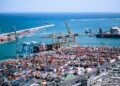
Green hydrogen is rapidly becoming a strategic export sector within the Morocco green economy. The country’s location, renewable resources, and port infrastructure position it as a future supplier to European and global markets.
Morocco is also positioning itself as a battery materials hub, leveraging its phosphate dominance for lithium iron phosphate battery production. The OCP Group inaugurated its first lithium-ion battery materials manufacturing plant at Jorf Lasfar in June 2025. Chinese firms including BTR New Material Group and Gotion High Tech have collectively pledged over 700 million US dollars in battery materials plants in Morocco.
Consequently, green hydrogen and battery materials together represent a new industrial layer being built on top of Morocco’s existing renewable energy capacity. These sectors create high-value manufacturing jobs and align Morocco with the EU’s Carbon Border Adjustment Mechanism requirements entering force in 2026.

Morocco Green Economy: Where to Focus in 2026
The Morocco green economy is active across 5 clear sectors: renewable energy, sustainable agriculture, circular economy, eco-industrial manufacturing, and green hydrogen and battery materials. Each sector has institutional support, international financing, and measurable targets already in place. Therefore, 2026 is not a preparation phase. It is an execution phase.
For the first time, Morocco’s 2026 Law of Finance includes information on public financing for climate targets, and the government has clarity on financing gaps. This budget alignment signals that green investment is now embedded in the country’s core fiscal planning. Businesses and investors who enter now will benefit from this structural momentum. The Morocco green economy is not a future story. It is already being written.
Conclusion: Morocco Is Already Moving
The Morocco green economy is one of the most coherent and well-financed sustainability transitions in Africa and the broader Mediterranean region. Furthermore, it is supported by a consistent policy framework, a growing base of international partners, and real projects at every stage of development. From solar farms in the Sahara to precision irrigation in the Atlas valleys, the transformation is visible and measurable. Morocco could generate 1.7 million additional jobs by 2035 and increase real GDP by close to 20% above baseline if structural reforms continue at the current pace. The Morocco green economy rewards those who engage early, plan carefully, and choose the right sector. The framework is in place. The capital is moving. The time to act is now.


المقال متوازن ويغطي القطاعات الرئيسية بشكل ممتاز، خاصة الجزء المتعلق بطاقة الرياح في طرفاية اللي قلة من الناس يعرفون عنها. أنا أم لطفلين وأشتغل في الفلاحة المستدامة بمنطقة سوس، ولاحظت كيف أن البرامج الحكومية للري بالتنقيط والطاقة الشمسية غيرت حياة الفلاحين الصغار. ياليت تخصصون مقال قادم لقطاع الفلاحة الإيكولوجية لأنه ما ياخذ حقه من التغطية. شكراً على المجهود.
المغرب فعلاً قاطع شوط كبير في الطاقات المتجددة، ومحطة نور ورزازات صارت مرجع عالمي. اللي يخصنا الحين هو الانتقال للهيدروجين الأخضر بسرعة قبل ما الإمارات وعمان يسبقونا في السوق الأوروبي.