
Moroccan pottery is one of the most alive craft traditions you will find anywhere on the planet, and the villages clustered near the ancient city of Fès are where its deepest secrets still breathe.
Why Fès became the center of a clay tradition
The history of pottery in Morocco goes back over 6,000 years, when early peoples shaped clay to create jars, tagines, and everyday utensils. Fès, however, became a concentration point for the finest work. The Idrisid dynasty, in the 8th and 9th centuries, structured the first major production centers in the city. That foundation never disappeared.

The Potters’ Quarter of Fès was moved to an area known as Ain Nokbi, just outside the medina and near the southern ramparts, because of the smoke produced by the kilns’ firing process. Today, Ain Nokbi is a working village of clay, not a museum. Several Fassi pottery cooperatives operate in Ain Nokbi, running workshops, apprenticeship centers, and showrooms of finished products. You walk in as a visitor and leave with clay under your fingernails.
The most prized Moroccan pottery comes from Fès. While earthenware is common across the country, Fassi pottery is crafted from fine, light-colored stoneware clay. That difference in material is not a small detail. It shapes the entire character of the finished piece.
The hand-throwing process, step by step
The process starts with soaking the clay in water for a week, then kneading it first by foot and then by hand to release any air bubbles and create a soft, pliable material. This first stage takes patience. There are no shortcuts, and every artisan here knows it.
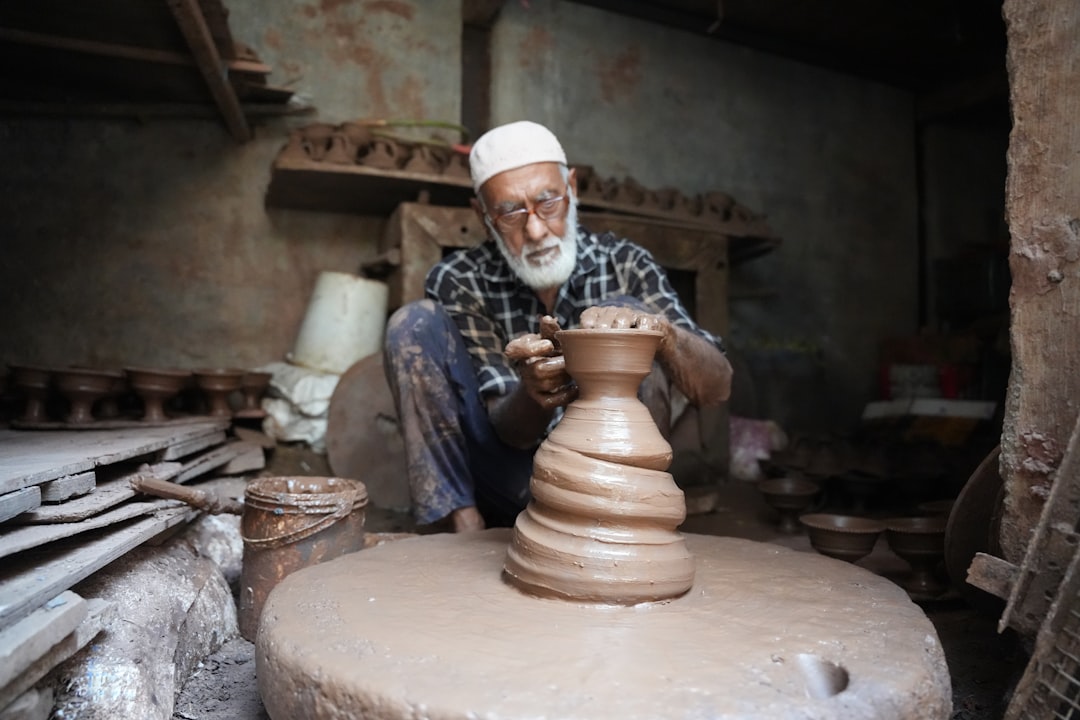
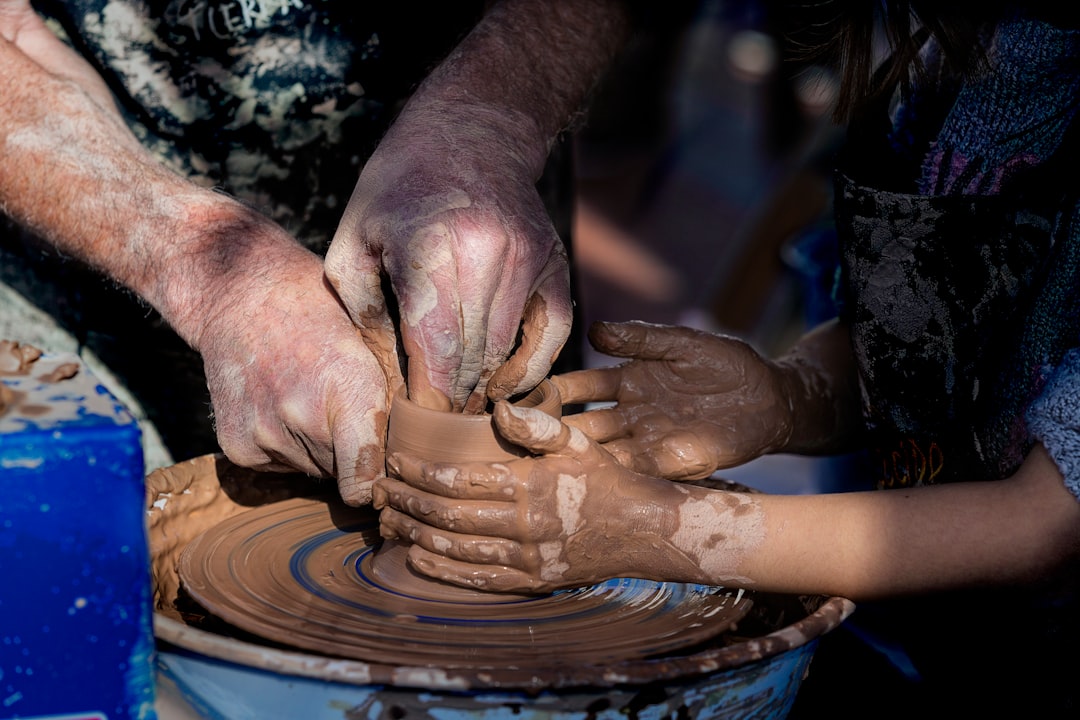
Only the most traditional methods are used to throw pottery in Ain Nokbi. The wheel is turned by foot for complete control, and a fine thread or piece of wire is used to cut the finished shape free from the wheel. Hand-throwing is a foundational technique where artisans shape clay on a spinning pottery wheel. Watching it happen in real time, with both hands working wet clay while the foot maintains rhythm below, is genuinely difficult to describe.
Once the desired shape forms, it is set out in the sun to dry. Many artisans still use traditional wood-fired kilns, which give a unique character to the finished products. The first firing reaches between 900 and 1,200 degrees Celsius in a wood or gas oven. After that first firing, the decoration begins.
What makes Fassi pottery different from everything else
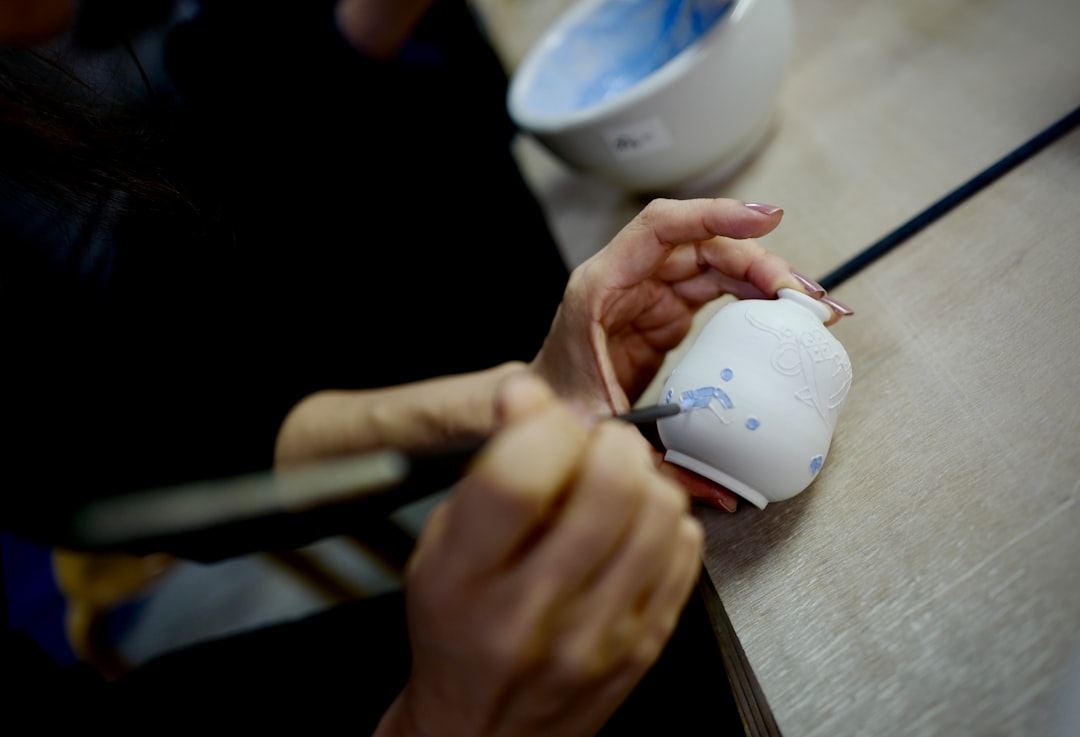
In Fès, potters are known for their use of cobalt blue glazes that have become symbolic of the city’s ceramic artistry. These shades are not just aesthetic choices but carry a strong regional identity. Every piece you pick up from a Fassi workshop carries that signature. High-quality cobalt is essential for achieving the iconic “Bleu de Fès,” which contrasts sharply against the white clay body after high-temperature firing.
Fès pottery is double-fired and painted in cobalt blue with precise arabesque patterns on a white tin-glaze base. The decoration requires a separate set of skills that takes years to develop. Artisans use natural pigments derived from minerals and plants, ensuring the colors are both beautiful and environmentally responsible.
Additionally, Fès is inseparable from zellige, the geometric tilework that appears across Morocco’s greatest buildings. Fès pottery is renowned for its intricate geometric patterns and bright glazes. The artisans of Fès have mastered the art of zellige, a form of mosaic tilework that often connects directly to the pottery tradition.





Expert perspective on Moroccan pottery as living heritage
Moroccan pottery is not simply a craft that survives in workshops. It is a complete system of knowledge, passed from master to apprentice across generations, involving the selection of clay, the preparation of the body, the control of the wheel, the chemistry of glazes, and the reading of a kiln’s temperature without instruments. Each of these stages requires years of focused practice. A young artisan in Ain Nokbi does not begin decorating for several years. First, they learn the clay itself. That relationship with the raw material is what separates a craftsman who copies from one who creates. The current programs connecting these masters with UNESCO are critical, because once this knowledge breaks, it does not come back easily.
Industry perspective, craft heritage and cultural preservation professionals in Morocco
How to learn Moroccan pottery as a visitor
Becoming a skilled artisan in Morocco typically involves a rigorous apprenticeship, where young learners work closely with masters in small, family-run workshops. As a visitor, you will not complete that journey. But short workshops in Ain Nokbi give you direct access to the same tools and techniques. In intimate workshop settings, you work side by side with skilled artisans who share techniques passed down through generations.
Basic techniques include centering clay on the wheel, opening it, and pulling it upward. It is harder than it looks but genuinely satisfying. Most workshops in the area are open to beginners. Admission to the pottery village of Fès is free. You pay only for hands-on sessions and materials.
Morocco’s government also works to protect these skills at a national level. Morocco has launched its “Moroccan Handicraft Treasures” program, a national initiative aimed at safeguarding traditional crafts threatened with extinction. The program protects Morocco’s intangible cultural heritage by training young artisans under the supervision of master craftsmen. That structure mirrors exactly what you see playing out inside the workshops of Ain Nokbi every day.
Moroccan pottery is worth your full attention
Moroccan pottery near Fès is not a tourist attraction with a gift shop at the end. It is a living system, built on clay, fire, and the patience to do things correctly. In recent years, there has been a renewed interest in traditional crafts among young Moroccan designers and international artisans, many blending traditional techniques with modern aesthetics. That energy is visible in Ain Nokbi. Visit, stay longer than you planned, and put your hands in the clay. Moroccan pottery changes how you see what it means to make something from nothing. Come ready to be humbled, and come ready to learn.
Discover more about Moroccan pottery
- UNESCO Intangible Cultural Heritage: Morocco
- Morocco launches third edition of “Moroccan Handicraft Treasures” to preserve endangered crafts, Africanews
- Morocco’s Traditional Ceramic Crafts: Pottery and Zellige Tilework, Mint Tea Tours