
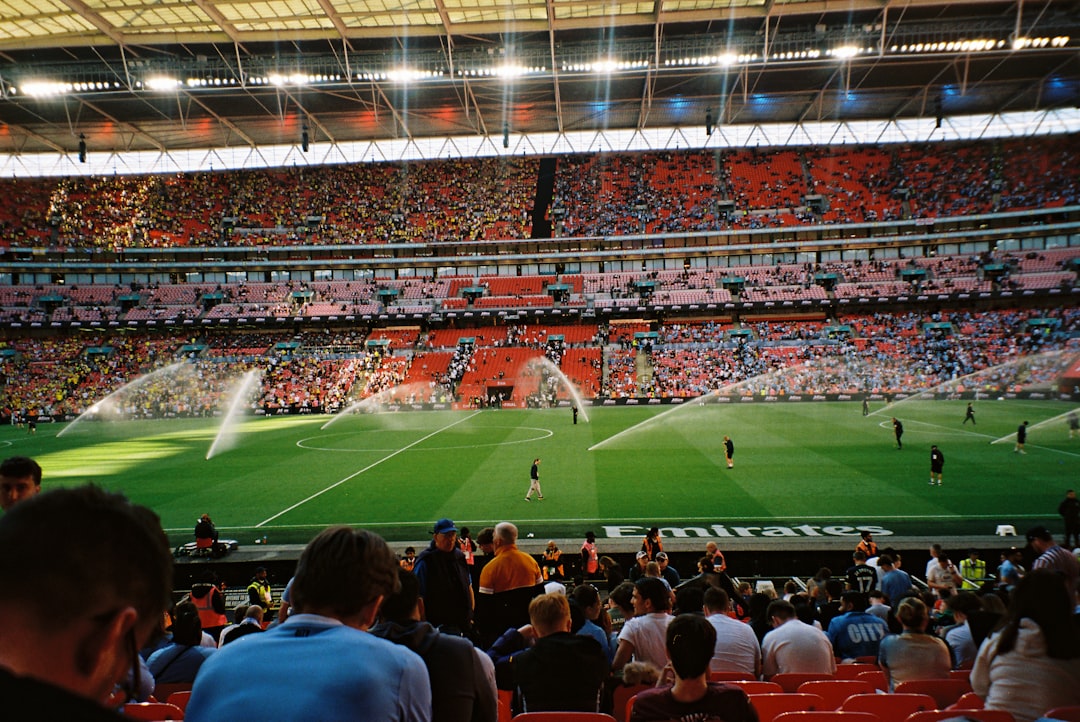
Morocco diplomacy has found a new arena, and it has grass, floodlights, and 115,000 seats in Casablanca.
A bid built on strategy, not luck
Morocco had made 5 failed bids to host the FIFA World Cup before this one, with unsuccessful attempts in 1994, 1998, 2006, 2010, and 2026. That history of rejection could have ended the dream. Instead, it sharpened it. In March 2023, King Mohammed VI announced that Morocco would join the Spain and Portugal bid as a co-host. The decision was not only bold. It was calculated.
Morocco’s joint bid with Spain and Portugal came after Madrid backed Morocco’s position on the Western Sahara conflict. That territory, a former Spanish colony, is largely controlled by Morocco and claimed by the Sahrawi separatists of the Polisario Front. The conflict has long sat at the heart of Morocco’s diplomatic tensions with neighbouring Algeria. Madrid’s diplomatic shift in 2022 “undoubtedly paved the way for the joint World Cup bid,” according to international relations expert Tajeddine El-Husseini.
On 11 December 2024, FIFA confirmed the 2030 World Cup would be jointly hosted by Morocco, Portugal, and Spain. The announcement came during an extraordinary FIFA Congress meeting, alongside the decision to award the 2034 tournament to Saudi Arabia. The joint bid scored an impressive 4.2 out of 5 in FIFA’s evaluation, for exceeding the minimum hosting requirements.
Morocco diplomacy attracts world leaders
The stadium is only part of the story. In the 12 months before mid-2025 alone, several world leaders visited Morocco in search of deals. France’s Emmanuel Macron, China’s Xi Jinping, Spain’s Pedro Sánchez, and leaders from across Africa all travelled to Morocco to strengthen diplomatic and economic ties, often announcing multi-billion-dollar investments.
The United Kingdom’s foreign secretary David Lammy also announced increased cooperation with Rabat across sectors including infrastructure, construction, energy, healthcare, and logistics. This signals that major powers sense a growing number of commercial opportunities as Morocco’s economic transformation accelerates.
With massive investments and a strategy focused on performance, football diplomacy, and regional influence, Morocco intends to make the 2030 World Cup not only a sporting success but also a showcase of a modern country at the crossroads of football, innovation, and transcontinental cooperation.
Building a country, not just stadiums
Morocco is not simply building seats for spectators. The government has committed approximately MAD 150 billion, equal to around $15 billion, to infrastructure projects across multiple sectors. Morocco has started developing high-speed rail lines and regional express networks to connect Casablanca, Rabat, Tanger, and the southern provinces. These projects will promote territorial and economic integration across the country.
A 115,000-seat Hassan II Stadium in Casablanca is being constructed specifically for the World Cup and will be one of the world’s largest. Rabat is lobbying for it to host the championship match, arguably the single most-watched event in the world. The expanded port of Tanger Med is now Africa’s largest cargo port, connected to 180 ports worldwide.
Morocco is targeting 26 million visitors by 2030. This follows a record performance that saw the country welcome 17.4 million tourist arrivals in 2024, firmly establishing it as North Africa’s most visited nation. Morocco has committed $4 billion to expanding hotel capacity by 20 percent, adding around 25,000 rooms by the end of the decade to accommodate an estimated 1.2 million foreign fans attending the tournament.
Expert perspective on Morocco diplomacy and the 2030 tournament
Morocco’s co-hosting of the 2030 World Cup is far more than a sporting milestone. It represents a deliberate and long-term strategy to position the country as a serious economic and diplomatic power. The infrastructure investments being made today, from high-speed rail to port expansion, are designed to outlast the tournament by decades. Football has become the visible face of a much deeper national transformation, one that connects infrastructure, tourism, foreign investment, and continental leadership into a single vision. Morocco is telling the world that it is open, stable, and ready to lead.
Industry perspective, sports diplomacy and investment professionals in Morocco
Africa’s voice at the table
Morocco has used football as a tool for diplomacy, strengthening ties with African nations and presenting itself as a unifying force in the region. Since rejoining the African Union in 2017, Morocco has actively pursued partnerships with 44 African football federations, reinforcing its image as a continental leader.
The 2022 World Cup in Qatar saw the Moroccan men’s team make history as the first African and Arab team to reach the semifinals. This achievement energized the nation and demonstrated its potential to compete at the highest level. The strategic shift that followed positioned football as a lever for modernization, social cohesion, and international influence.
Morocco’s ambassador to the United States, Youssef Amrani, described the 2030 edition as a “historic competition” that will connect Africa and Europe for the first time, reflecting shared values and a common Mediterranean space. “We have a story to tell the world,” Amrani said, emphasizing that Morocco’s efforts aim not only to prepare stadiums but to promote ambition, vision, and continental cooperation.
-






The real test ahead
No transformation arrives without friction. In late 2025, protests erupted in several Moroccan cities led by the youth movement known as Gen Z 212. The protests were sparked by concerns over the deterioration of health and education systems and government spending on sports infrastructure for the 2025 Africa Cup of Nations and the 2030 FIFA World Cup.
Demonstrations subsided after the monarch promised to address several core demands, including youth job creation and improvements in public services. The tension points to a broader truth: a nation hosting the world must also invest in itself.
The focus on infrastructure connectivity is partly motivated by the need to meet World Cup standards and partly by a recognition of the economic benefits such modernization could bring. The projects also represent a wider Moroccan ambition: to be recognized as an economy similar in size and sophistication to its European neighbours.
Morocco diplomacy: a long game worth watching
Morocco diplomacy has never moved in a straight line. It has moved through years of rejected bids, diplomatic pivots, and continental repositioning. The 2030 World Cup is the most visible result of that patient strategy. By linking its dual-hosting role to the World Cup’s centenary, Morocco is signalling a clear intent: to use football’s biggest stage to drive a lasting legacy of economic and territorial transformation, cementing its role as a competitive regional hub.
The medinas, the mountains, and the Sahara will still be there when the final whistle blows. But by 2030, the world will see a Morocco that has rebuilt its roads, widened its ports, filled its hotels, and spoken with confidence at the table of global affairs. That is Morocco diplomacy in its most ambitious form, and the game is very much still in progress.

*Follow MAwebzine for more on Morocco, football, and the world beyond the postcard.*