
CONTACT
  • Login
Upgrade
MAwebzine
Advertisement
  • Home
    • Our Authors
    • MAwebzine Readers Club
    • Media Kit
    • Contact
    • Cookie Policy
    • Terms and Conditions
  • News
  • Lifestyle
    • Beauty
    • Kids
    • Interior Decoration
    • Well-being
  • Vibes
  • Culture
  • Sports
  • Travels
  • Business
  • World
  • Local Guide
    • Activities in Morocco
    • Hotels in Morocco
    • Nightlife in Morocco
    • Restaurants in Morocco
    • Services in Morocco
    • Shopping in Morocco
  • APP
  • Home
    • Our Authors
    • MAwebzine Readers Club
    • Media Kit
    • Contact
    • Cookie Policy
    • Terms and Conditions
  • News
  • Lifestyle
    • Beauty
    • Kids
    • Interior Decoration
    • Well-being
  • Vibes
  • Culture
  • Sports
  • Travels
  • Business
  • World
  • Local Guide
    • Activities in Morocco
    • Hotels in Morocco
    • Nightlife in Morocco
    • Restaurants in Morocco
    • Services in Morocco
    • Shopping in Morocco
  • APP
No Result
View All Result
MAwebzine
No Result
View All Result
Home Creativity

Moroccan pottery villages near Fès

Inside the ancient kilns of Ain Nokbi, where clay becomes art and every piece carries centuries of skill.

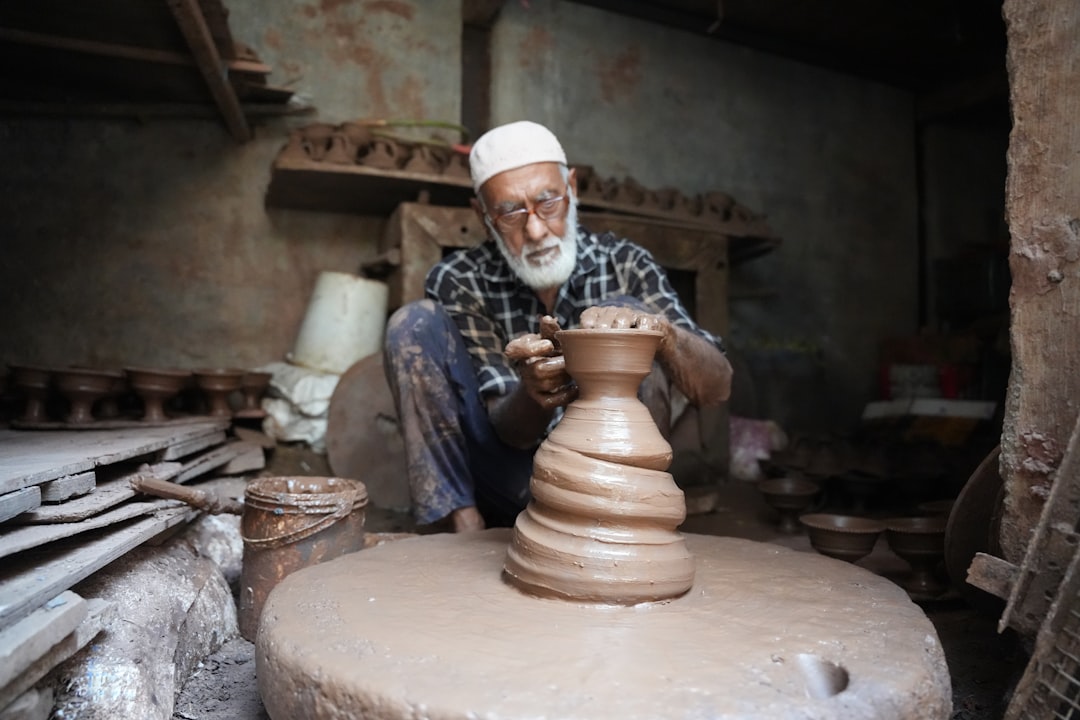
A Fassi artisan demonstrates Moroccan pottery hand-throwing technique on a foot-powered wheel in Ain Nokbi

Moroccan pottery is one of the most alive craft traditions you will find anywhere on the planet, and the villages clustered near the ancient city of Fès are where its deepest secrets still breathe.

Why Fès became the center of a clay tradition

The history of pottery in Morocco goes back over 6,000 years, when early peoples shaped clay to create jars, tagines, and everyday utensils. Fès, however, became a concentration point for the finest work. The Idrisid dynasty, in the 8th and 9th centuries, structured the first major production centers in the city. That foundation never disappeared.

The Potters’ Quarter of Fès was moved to an area known as Ain Nokbi, just outside the medina and near the southern ramparts, because of the smoke produced by the kilns’ firing process. Today, Ain Nokbi is a working village of clay, not a museum. Several Fassi pottery cooperatives operate in Ain Nokbi, running workshops, apprenticeship centers, and showrooms of finished products. You walk in as a visitor and leave with clay under your fingernails.

The most prized Moroccan pottery comes from Fès. While earthenware is common across the country, Fassi pottery is crafted from fine, light-colored stoneware clay. That difference in material is not a small detail. It shapes the entire character of the finished piece.

The hand-throwing process, step by step

The process starts with soaking the clay in water for a week, then kneading it first by foot and then by hand to release any air bubbles and create a soft, pliable material. This first stage takes patience. There are no shortcuts, and every artisan here knows it.

Only the most traditional methods are used to throw pottery in Ain Nokbi. The wheel is turned by foot for complete control, and a fine thread or piece of wire is used to cut the finished shape free from the wheel. Hand-throwing is a foundational technique where artisans shape clay on a spinning pottery wheel. Watching it happen in real time, with both hands working wet clay while the foot maintains rhythm below, is genuinely difficult to describe.

Once the desired shape forms, it is set out in the sun to dry. Many artisans still use traditional wood-fired kilns, which give a unique character to the finished products. The first firing reaches between 900 and 1,200 degrees Celsius in a wood or gas oven. After that first firing, the decoration begins.

Install the MAwebzine App
Always stay up to date with the latest news from Morocco.
Install now →

What makes Fassi pottery different from everything else

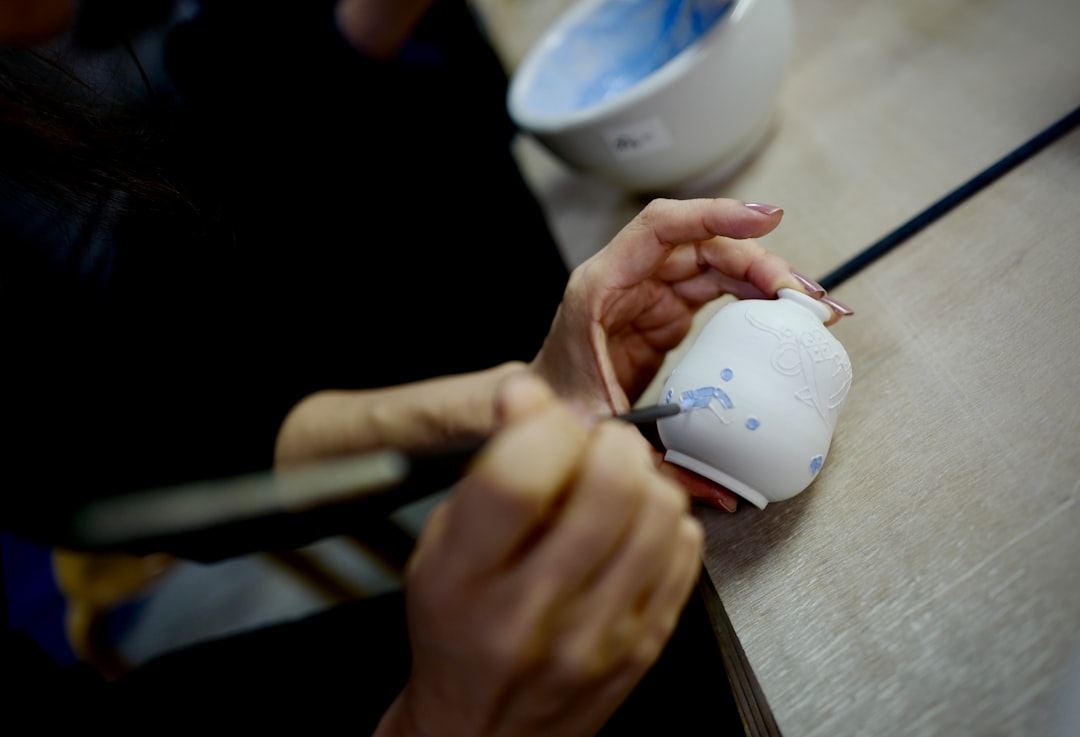
In Fès, potters are known for their use of cobalt blue glazes that have become symbolic of the city’s ceramic artistry. These shades are not just aesthetic choices but carry a strong regional identity. Every piece you pick up from a Fassi workshop carries that signature. High-quality cobalt is essential for achieving the iconic “Bleu de Fès,” which contrasts sharply against the white clay body after high-temperature firing.

Fès pottery is double-fired and painted in cobalt blue with precise arabesque patterns on a white tin-glaze base. The decoration requires a separate set of skills that takes years to develop. Artisans use natural pigments derived from minerals and plants, ensuring the colors are both beautiful and environmentally responsible.

Additionally, Fès is inseparable from zellige, the geometric tilework that appears across Morocco’s greatest buildings. Fès pottery is renowned for its intricate geometric patterns and bright glazes. The artisans of Fès have mastered the art of zellige, a form of mosaic tilework that often connects directly to the pottery tradition.

-

A maallem master artisan cuts hand-shaped zellige pieces in a traditional Moroccan mosaic workshop in Fez

Moroccan mosaic and meditative design

18/07/2026
A Moroccan calligraphy artist holds a reed pen over paper covered in flowing Arabic script

Moroccan calligraphy artists to discover

02/07/2026
A maalem performs for a large crowd at the Gnaoua festival in Essaouira, Morocco

Gnaoua festival: your guide to Essaouira

25/06/2026
Close-up of a craftsman sharpening a blade on a stone, wearing a striped sweater and cap, with wooden tool handles nearby.

Zellige tilework in modern Moroccan design

16/06/2026
Traditional Moroccan doors featuring historic carved woodwork in medina for restoration and preservation

Traditional Moroccan Doors: Restoring Historic Woodwork

11/02/2026
Moroccan tilework featuring traditional zellige geometric patterns for DIY home décor projects

Moroccan Tilework DIY: Zellige Projects

14/01/2026

An artisan applies the iconic cobalt blue glaze to a piece of Moroccan pottery in a Fès workshop

Expert perspective on Moroccan pottery as living heritage

Moroccan pottery is not simply a craft that survives in workshops. It is a complete system of knowledge, passed from master to apprentice across generations, involving the selection of clay, the preparation of the body, the control of the wheel, the chemistry of glazes, and the reading of a kiln’s temperature without instruments. Each of these stages requires years of focused practice. A young artisan in Ain Nokbi does not begin decorating for several years. First, they learn the clay itself. That relationship with the raw material is what separates a craftsman who copies from one who creates. The current programs connecting these masters with UNESCO are critical, because once this knowledge breaks, it does not come back easily.

Industry perspective, craft heritage and cultural preservation professionals in Morocco

How to learn Moroccan pottery as a visitor

Becoming a skilled artisan in Morocco typically involves a rigorous apprenticeship, where young learners work closely with masters in small, family-run workshops. As a visitor, you will not complete that journey. But short workshops in Ain Nokbi give you direct access to the same tools and techniques. In intimate workshop settings, you work side by side with skilled artisans who share techniques passed down through generations.

Basic techniques include centering clay on the wheel, opening it, and pulling it upward. It is harder than it looks but genuinely satisfying. Most workshops in the area are open to beginners. Admission to the pottery village of Fès is free. You pay only for hands-on sessions and materials.

Morocco’s government also works to protect these skills at a national level. Morocco has launched its “Moroccan Handicraft Treasures” program, a national initiative aimed at safeguarding traditional crafts threatened with extinction. The program protects Morocco’s intangible cultural heritage by training young artisans under the supervision of master craftsmen. That structure mirrors exactly what you see playing out inside the workshops of Ain Nokbi every day.
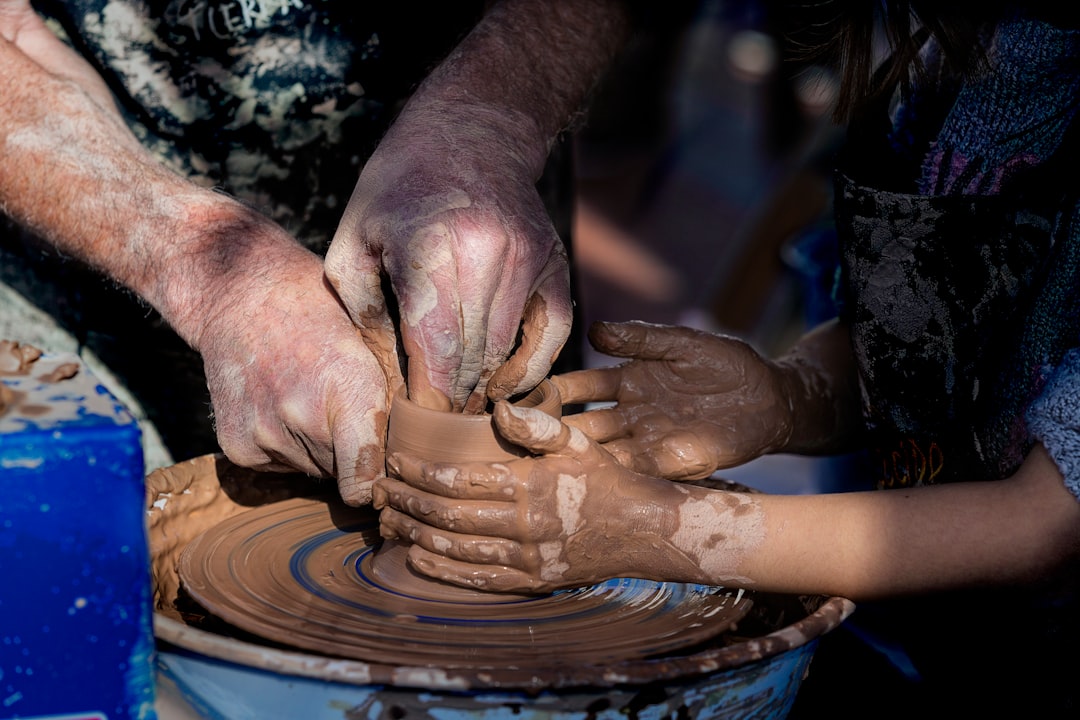
A visitor tries Moroccan pottery hand-throwing under the guidance of a master artisan in Ain Nokbi

Moroccan pottery is worth your full attention

Moroccan pottery near Fès is not a tourist attraction with a gift shop at the end. It is a living system, built on clay, fire, and the patience to do things correctly. In recent years, there has been a renewed interest in traditional crafts among young Moroccan designers and international artisans, many blending traditional techniques with modern aesthetics. That energy is visible in Ain Nokbi. Visit, stay longer than you planned, and put your hands in the clay. Moroccan pottery changes how you see what it means to make something from nothing. Come ready to be humbled, and come ready to learn.

Discover more about Moroccan pottery

  • UNESCO Intangible Cultural Heritage: Morocco
  • Morocco launches third edition of “Moroccan Handicraft Treasures” to preserve endangered crafts, Africanews
  • Morocco’s Traditional Ceramic Crafts: Pottery and Zellige Tilework, Mint Tea Tours

author avatar
Youssef Alami
Youssef Alami is a Marrakech-born travel writer and sports journalist who has lived in Rabat, Tangier, and Agadir. He covers Morocco's most breathtaking destinations, local hidden gems, and the country's passionate sports culture. Whether it's a road trip through the Atlas Mountains or a guide to the best medina street food, Youssef writes for anyone who wants to discover Morocco beyond the postcard.
See Full Bio
Previous Post

African handball: Morocco’s red-hot rise

Next Post

Evening ritual for Morocco’s hot nights

Related Posts

A maallem master artisan cuts hand-shaped zellige pieces in a traditional Moroccan mosaic workshop in Fez
Creativity

Moroccan mosaic and meditative design

18/07/2026
A Moroccan calligraphy artist holds a reed pen over paper covered in flowing Arabic script
Creativity

Moroccan calligraphy artists to discover

02/07/2026
A maalem performs for a large crowd at the Gnaoua festival in Essaouira, Morocco
Creativity

Gnaoua festival: your guide to Essaouira

25/06/2026
Close-up of a craftsman sharpening a blade on a stone, wearing a striped sweater and cap, with wooden tool handles nearby.
Creativity

Zellige tilework in modern Moroccan design

16/06/2026
Traditional Moroccan doors featuring historic carved woodwork in medina for restoration and preservation
Creativity

Traditional Moroccan Doors: Restoring Historic Woodwork

11/02/2026
Next Post
A Moroccan woman relaxing during an evening ritual in a traditional hammam setting, surrounded by soft candlelight.

Evening ritual for Morocco's hot nights

Leave a Reply Cancel reply

Your email address will not be published. Required fields are marked *

No Result
View All Result

Our Focus

MAwebzine is your international window on Morocco: lifestyle, business, culture, sports and events for a global audience drawn to the kingdom's rich heritage and modern ambition.

Our Readers

MAwebzine addresses readers who engage with Morocco at a high level: professionally, financially, strategically, and as decision-makers in their fields.

Our Approach

Lifestyle, culture, and investment are integrated as context and indicators of economic transformation, regional positioning, and Morocco's growing international profile, not standalone entertainment.

Recent Post

  • Evening ritual for Morocco’s hot nights
  • Moroccan pottery villages near Fès

© 2026 MAwebzine by NOOR & NOOR — part of WEBZINE.world.

Welcome Back!

Login to your account below

Forgotten Password?

Retrieve your password

Please enter your username or email address to reset your password.

Log In
Manage Consent
To provide the best experiences, we use technologies like cookies to store and/or access device information. Consenting to these technologies will allow us to process data such as browsing behavior or unique IDs on this site. Not consenting or withdrawing consent, may adversely affect certain features and functions.
Functional Always active
The technical storage or access is strictly necessary for the legitimate purpose of enabling the use of a specific service explicitly requested by the subscriber or user, or for the sole purpose of carrying out the transmission of a communication over an electronic communications network.
Preferences
The technical storage or access is necessary for the legitimate purpose of storing preferences that are not requested by the subscriber or user.
Statistics
The technical storage or access that is used exclusively for statistical purposes. The technical storage or access that is used exclusively for anonymous statistical purposes. Without a subpoena, voluntary compliance on the part of your Internet Service Provider, or additional records from a third party, information stored or retrieved for this purpose alone cannot usually be used to identify you.
Marketing
The technical storage or access is required to create user profiles to send advertising, or to track the user on a website or across several websites for similar marketing purposes.
  • Manage options
  • Manage services
  • Manage {vendor_count} vendors
  • Read more about these purposes
View preferences
  • {title}
  • {title}
  • {title}
No Result
View All Result
  • Home
    • Our Authors
    • MAwebzine Readers Club
    • Media Kit
    • Contact
    • Cookie Policy
    • Terms and Conditions
  • News
  • Lifestyle
    • Beauty
    • Kids
    • Interior Decoration
    • Well-being
  • Vibes
  • Culture
  • Sports
  • Travels
  • Business
  • World
  • Local Guide
    • Activities in Morocco
    • Hotels in Morocco
    • Nightlife in Morocco
    • Restaurants in Morocco
    • Services in Morocco
    • Shopping in Morocco
  • APP

© 2026 MAwebzine by NOOR & NOOR — part of WEBZINE.world.

MAwebzine Readers Club

Join the MAwebzine Readers Club!

Read and comment on our blogs, collect Stars and receive gifts from our partners. 

More Info
Register
Log In
Not enough quota to unlock this post
Unlock left : 0
Are you sure want to cancel subscription?
Verified by MonsterInsights
enEnglisharالعربيةdeDeutschesEspañolfrFrançaisnlNederlands