
CONTACT
  • Login
Upgrade
MAwebzine
Advertisement
  • Home
    • Our Authors
    • MAwebzine Readers Club
    • Media Kit
    • Contact
    • Cookie Policy
    • Terms and Conditions
  • News
  • Lifestyle
    • Beauty
    • Kids
    • Interior Decoration
    • Well-being
  • Vibes
  • Culture
  • Sports
  • Travels
  • Business
  • World
  • Local Guide
    • Activities in Morocco
    • Hotels in Morocco
    • Nightlife in Morocco
    • Restaurants in Morocco
    • Services in Morocco
    • Shopping in Morocco
  • APP
  • Home
    • Our Authors
    • MAwebzine Readers Club
    • Media Kit
    • Contact
    • Cookie Policy
    • Terms and Conditions
  • News
  • Lifestyle
    • Beauty
    • Kids
    • Interior Decoration
    • Well-being
  • Vibes
  • Culture
  • Sports
  • Travels
  • Business
  • World
  • Local Guide
    • Activities in Morocco
    • Hotels in Morocco
    • Nightlife in Morocco
    • Restaurants in Morocco
    • Services in Morocco
    • Shopping in Morocco
  • APP
No Result
View All Result
MAwebzine
No Result
View All Result
Home Insights

Moroccan designers and royal textile

How the Fête du Trône is turning royal textile tradition into a platform for Morocco's most ambitious fashion entrepreneurs.

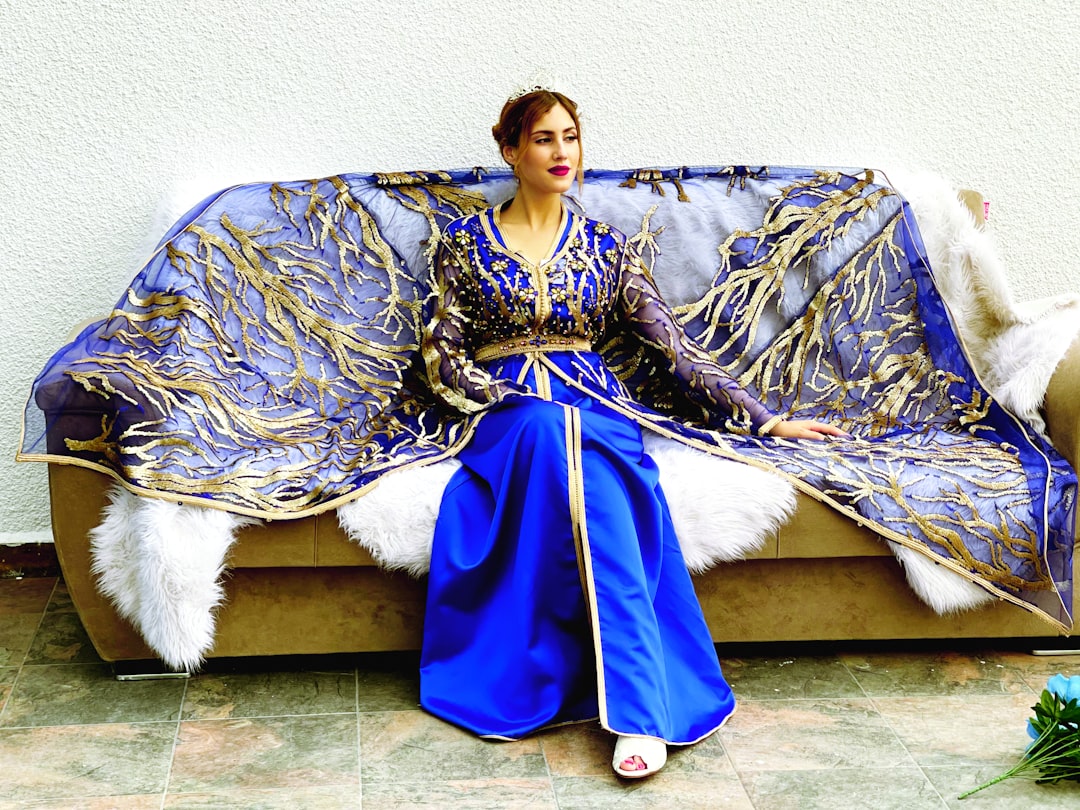
A Moroccan designer showing how Moroccan designers bridge royal textile heritage and modern fashion.

Moroccan designers are generating real business from the Fête du Trône, and the data behind that shift reveals an economy built on centuries of royal textile craft meeting contemporary global demand.

Why the Fête du Trône matters to the fashion economy

Throne Day in Morocco falls on July 30 each year. It marks the accession of King Mohammed VI to the throne in 1999. For the fashion industry, it is also the most visible moment of the year for traditional dress. By tradition, the King and his followers wear white on this day, and many people across the country appear in traditional Moroccan dress.
Cities come alive with parades, concerts, traditional dances, and art exhibitions that honor Morocco’s cultural heritage. Performers appear in ceremonial attire that carries deep historical meaning. This concentrated display of textile identity creates a visible platform. Moroccan designers who read this moment as a market opportunity are building businesses that reach well beyond July 30.

Royal courts historically encouraged luxurious fabrics, elaborate embroidery, and ceremonial attire for special occasions. That royal association still carries commercial weight. Brands that position their work within this lineage attract buyers from Europe, the Gulf, and across Africa.

The caftan as a global asset, not just a garment

The Moroccan caftan is a symbol of identity, an artisanal legacy, and a living reflection of Morocco’s history. UNESCO formally inscribed it on the Representative List of Intangible Cultural Heritage of Humanity on December 10, 2025. That recognition changed the commercial context immediately.

The inscription registered the caftan as a living expression of Morocco’s artisanal knowledge, a tradition maintained by tailors, embroiderers, weavers, and textile finishing specialists whose skills are transmitted through family apprenticeship, craft workshops, and fashion training programs. For Moroccan designers, this is formal international validation of the raw material they work with every day.

The caftan ecosystem sustains an entire economic sector, contributing 7% to Morocco’s GDP, and supports an estimated 2.3 million artisans. That is not a heritage statistic. That is a supply chain. Designers who connect to this network access skilled labor, authentic materials, and a story that sells in Paris, Amsterdam, and Lagos.

Install the MAwebzine App
Always stay up to date with the latest news from Morocco.
Install now →

How Moroccan designers are building modern brands from royal textile roots

Several Moroccan designers have achieved global recognition by combining the country’s rich cultural history with modern design approaches. They draw from the past, using embroidery, beading, and Moroccan textiles, while also watching international fashion trends.

Designer Kenza Bennani displays modern caftans that draw inspiration from Moroccan heritage but are designed for everyday wear. “We design modern Moroccan clothes with a focus on different origins as we are a crossroad of different civilisations historically,” Bennani explains. “And so we try to reinterpret these different cuts and different heritages in a way that is contemporary.”

Designers like Nesrine Slaoui and Amine Bendriouich have gained international attention for blending artisanal embroidery with minimalist Western silhouettes. Contemporary Moroccan designers reinterpret caftan aesthetics for international markets while maintaining signature elements such as the sfifa, aqad, and embroidery traditions as markers of authenticity. That balance between heritage and modernity is the core business model.

-

A foreign investor reviewing documents inside one of Morocco's free trade zones

Free trade zones Morocco: investor guide

27/07/2026
A professional woman working at a seafront café where Atlantic winds keep the air cool along Morocco's coast

Atlantic winds keep Morocco’s coast liveable

17/07/2026
A digital nomad working on a laptop at a coworking space on Morocco's Atlantic coast with ocean views in the background

Atlantic coast Morocco digital nomads

06/07/2026
A businesswoman walks along the Essaouira seafront during June Morocco travel season, with Atlantic winds in the background.

June Morocco travel: 5 smart reasons

20/06/2026
MAwebzine - fun happy life maktub morocco

The Art of Letting Go: 10 Simple Ways to Live a Fun and Happy Life

05/10/2025
moroccan-traveling-abroad

Young Moroccans Abroad: Balancing Wanderlust and Roots

30/09/2025

An artisan embroiders fabric in a Moroccan workshop, and the craft that Moroccan designers use to create the collections.

Expert perspective on heritage as economic strategy

The UNESCO listing of the Moroccan caftan in December 2025 is not just a cultural milestone. It is a legal and commercial tool. Designers who align their brand with formally recognized heritage gain protection against copying, access to international certification, and a credible origin story that premium buyers in Europe and the Gulf actively seek. Morocco’s artisan sector already feeds millions of livelihoods. The next step is structured investment in training, export pathways, and design education that connects traditional craft schools to fashion markets in Paris, Dubai, and Nairobi. The Fête du Trône moment, celebrated every July 30, functions as an annual brand launch for the whole sector. Entrepreneurs who treat it that way, rather than simply as a holiday, will outpace those who do not.

Industry perspective, fashion heritage and investment professionals in Morocco

Morocco as a design bridge between Europe and Africa

Marrakech is stepping into the global fashion conversation. Maroc Fashion Week 2026 positioned the city as a rising creative capital, with the April edition going beyond a traditional runway event to redefine Morocco’s place within the international fashion ecosystem.

At the heart of this revival is a clear ambition: to transform Marrakech into a dynamic hub where tradition meets modernity, and where local craftsmanship reaches an international stage. The event functions as a strategic platform connecting designers, investors, and global audiences.

Regional embroidery traditions add depth and variety to Moroccan design. Fez produces zardozi-style silver threadwork on wedding wear. Rabat is known for passementerie, including lavish trimmings, tassels, and braids on djellabas. Tetouan produces delicate cross-stitch on linen and wool, while natural dyeing techniques using indigo, saffron, and pomegranate rind add authentic color. Each region gives designers a distinct raw material. That geographic diversity is a competitive advantage in global markets that reward specificity.
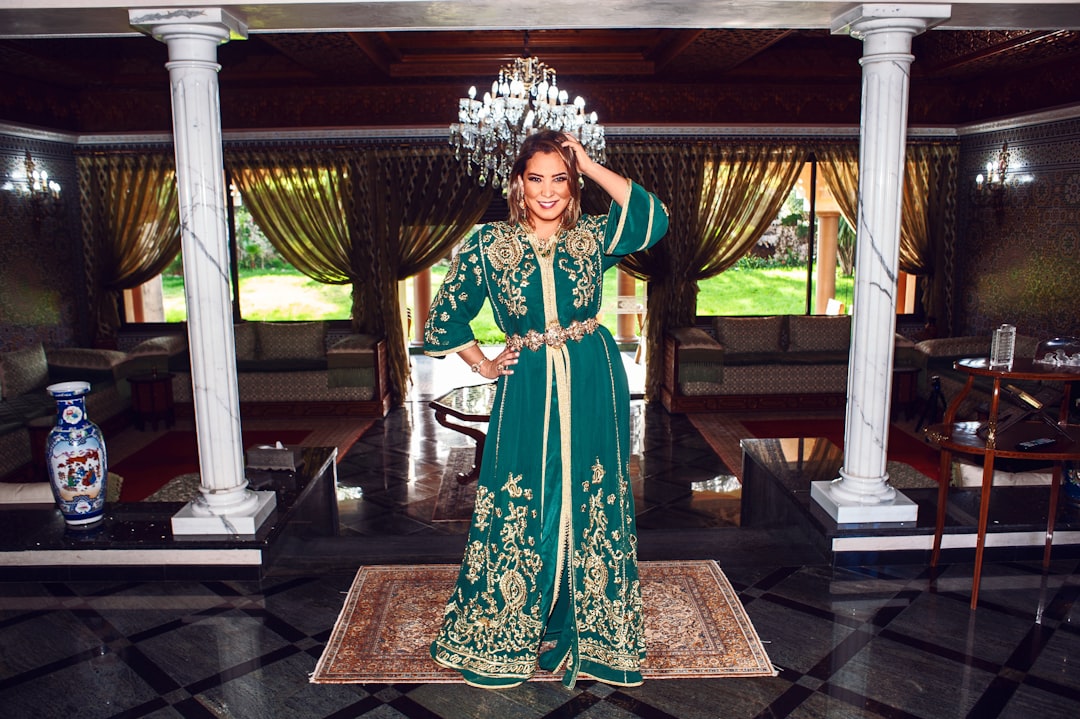
A Moroccan designer presents a collection inspired by textile heritage, reflecting the ambition of Moroccan designers today.

Conclusion: a clear opportunity for Moroccan designers

The Fête du Trône is one concentrated moment when Moroccan designers gain maximum cultural visibility. The caftan is a living tradition, constantly evolving, that celebrates the memory and creativity of Morocco. Entrepreneurs who treat this heritage as a business asset, not simply a cultural one, are the ones building labels with real international reach. Morocco has also launched the “Label Maroc” national initiative to protect its intangible heritage, giving Moroccan designers a formal framework to anchor their brand identity. The opportunity for Moroccan designers is direct: connect royal textile craft to modern cuts, build for export, and use July 30 as a commercial launch platform every year. The data and the recognition are already in place.

Discover more about Moroccan designers

  • UNESCO Intangible Cultural Heritage: Moroccan Caftan, Art, Traditions and Skills
  • Morocco World News: UNESCO Officially Adds Moroccan Caftan to World Heritage List
  • Africanews: Meet the Moroccan Designer Modernising the Traditional Caftan

author avatar
Salma Kettani
Salma Kettani is a Casablanca-based journalist with a background in economics from Université Hassan II. She writes about Morocco's growing investment climate, African business networks, and the country's role as a bridge between Europe and the continent. Her work is sharp, data-driven, and always grounded in real stories from entrepreneurs across the Kingdom.
See Full Bio
Previous Post

Local talent Morocco: contracts and costs

Next Post

Moroccan beauty kit from the souk

Related Posts

A foreign investor reviewing documents inside one of Morocco's free trade zones
Insights

Free trade zones Morocco: investor guide

27/07/2026
A professional woman working at a seafront café where Atlantic winds keep the air cool along Morocco's coast
Insights

Atlantic winds keep Morocco’s coast liveable

17/07/2026
A digital nomad working on a laptop at a coworking space on Morocco's Atlantic coast with ocean views in the background
Insights

Atlantic coast Morocco digital nomads

06/07/2026
A businesswoman walks along the Essaouira seafront during June Morocco travel season, with Atlantic winds in the background.
Insights

June Morocco travel: 5 smart reasons

20/06/2026
MAwebzine - fun happy life maktub morocco
Insights

The Art of Letting Go: 10 Simple Ways to Live a Fun and Happy Life

05/10/2025
Next Post
A Moroccan woman selecting argan oil from a souk stall as part of her Moroccan beauty routine

Moroccan beauty kit from the souk

Leave a Reply Cancel reply

Your email address will not be published. Required fields are marked *

No Result
View All Result

Our Focus

MAwebzine is your international window on Morocco: lifestyle, business, culture, sports and events for a global audience drawn to the kingdom's rich heritage and modern ambition.

Our Readers

MAwebzine addresses readers who engage with Morocco at a high level: professionally, financially, strategically, and as decision-makers in their fields.

Our Approach

Lifestyle, culture, and investment are integrated as context and indicators of economic transformation, regional positioning, and Morocco's growing international profile, not standalone entertainment.

Recent Post

  • Evening ritual for Morocco’s hot nights
  • Moroccan pottery villages near Fès

© 2026 MAwebzine by NOOR & NOOR — part of WEBZINE.world.

Welcome Back!

Login to your account below

Forgotten Password?

Retrieve your password

Please enter your username or email address to reset your password.

Log In
Manage Consent
To provide the best experiences, we use technologies like cookies to store and/or access device information. Consenting to these technologies will allow us to process data such as browsing behavior or unique IDs on this site. Not consenting or withdrawing consent, may adversely affect certain features and functions.
Functional Always active
The technical storage or access is strictly necessary for the legitimate purpose of enabling the use of a specific service explicitly requested by the subscriber or user, or for the sole purpose of carrying out the transmission of a communication over an electronic communications network.
Preferences
The technical storage or access is necessary for the legitimate purpose of storing preferences that are not requested by the subscriber or user.
Statistics
The technical storage or access that is used exclusively for statistical purposes. The technical storage or access that is used exclusively for anonymous statistical purposes. Without a subpoena, voluntary compliance on the part of your Internet Service Provider, or additional records from a third party, information stored or retrieved for this purpose alone cannot usually be used to identify you.
Marketing
The technical storage or access is required to create user profiles to send advertising, or to track the user on a website or across several websites for similar marketing purposes.
  • Manage options
  • Manage services
  • Manage {vendor_count} vendors
  • Read more about these purposes
View preferences
  • {title}
  • {title}
  • {title}
No Result
View All Result
  • Home
    • Our Authors
    • MAwebzine Readers Club
    • Media Kit
    • Contact
    • Cookie Policy
    • Terms and Conditions
  • News
  • Lifestyle
    • Beauty
    • Kids
    • Interior Decoration
    • Well-being
  • Vibes
  • Culture
  • Sports
  • Travels
  • Business
  • World
  • Local Guide
    • Activities in Morocco
    • Hotels in Morocco
    • Nightlife in Morocco
    • Restaurants in Morocco
    • Services in Morocco
    • Shopping in Morocco
  • APP

© 2026 MAwebzine by NOOR & NOOR — part of WEBZINE.world.

MAwebzine Readers Club

Join the MAwebzine Readers Club!

Read and comment on our blogs, collect Stars and receive gifts from our partners. 

More Info
Register
Log In
Not enough quota to unlock this post
Unlock left : 0
Are you sure want to cancel subscription?
Verified by MonsterInsights
enEnglisharالعربيةdeDeutschesEspañolfrFrançaisnlNederlands